Azurite

Clara Blue

Artistic name

Size
3 × 3 cm
Formula
$Cu_{3}(CO_{3})_{2}(OH)_{2}$
Rarity
Uncommon
Curiosity
Surprising

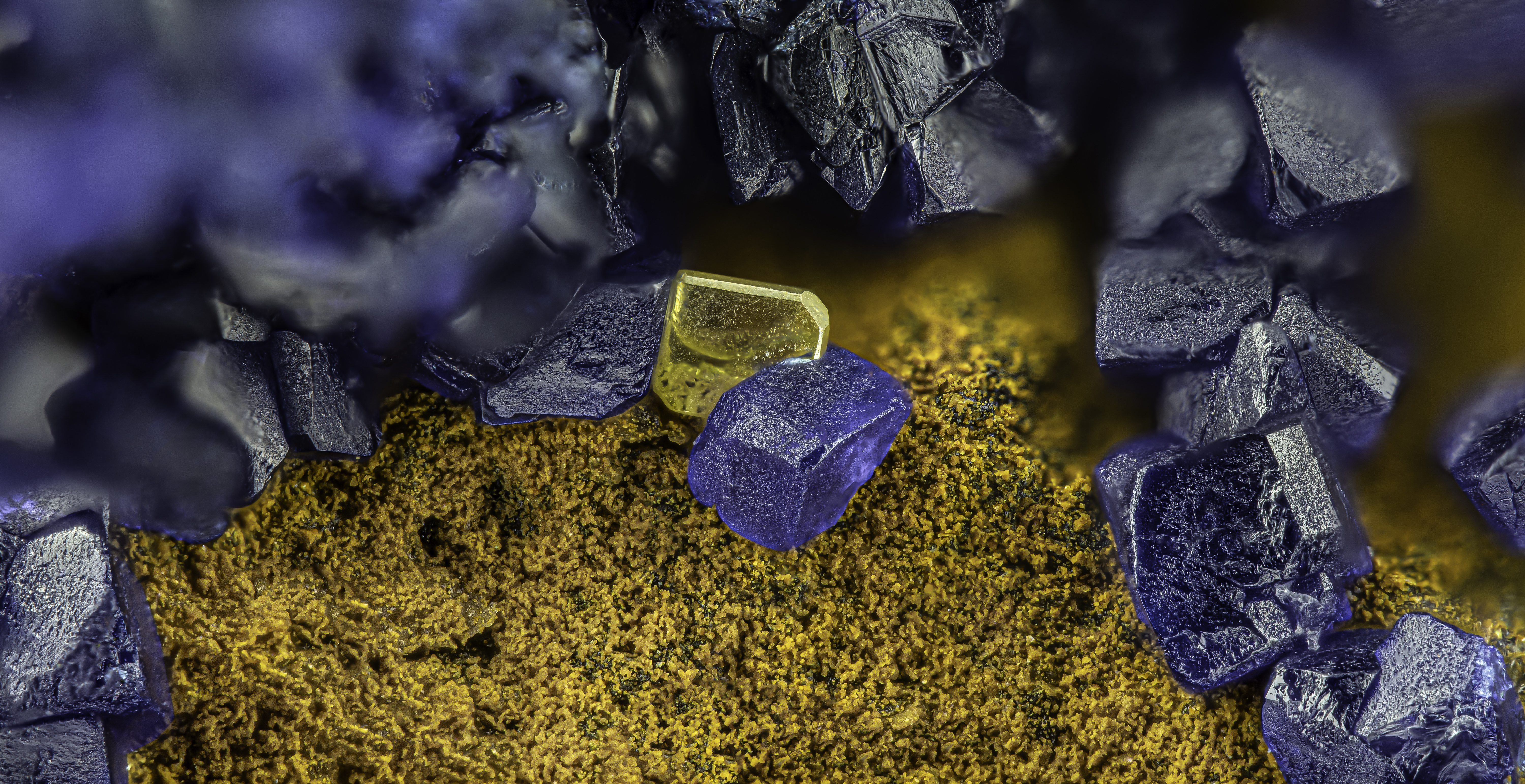
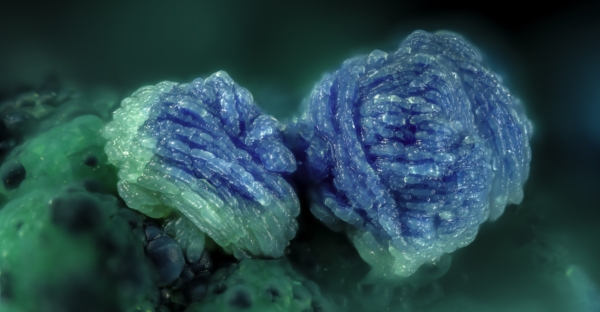
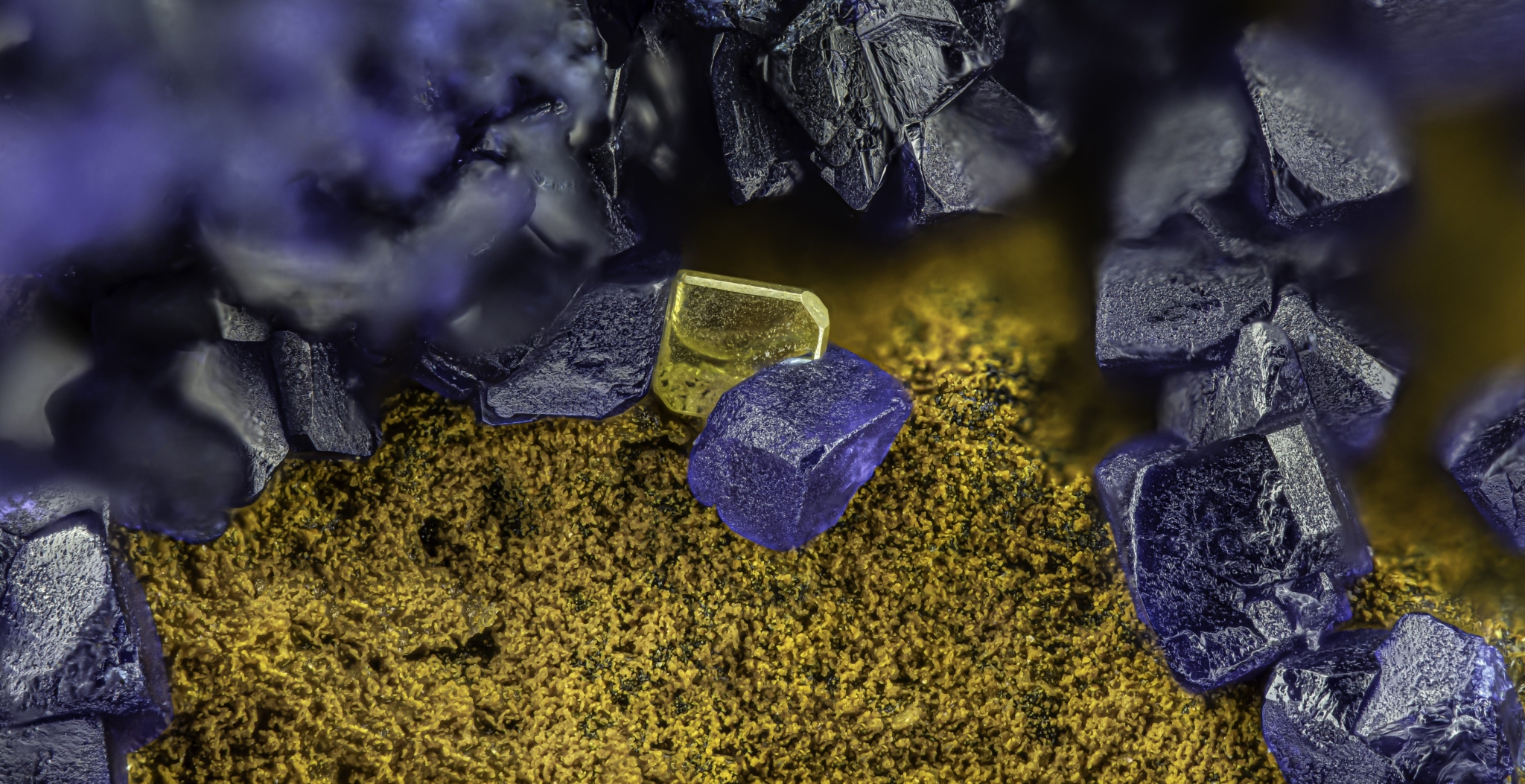
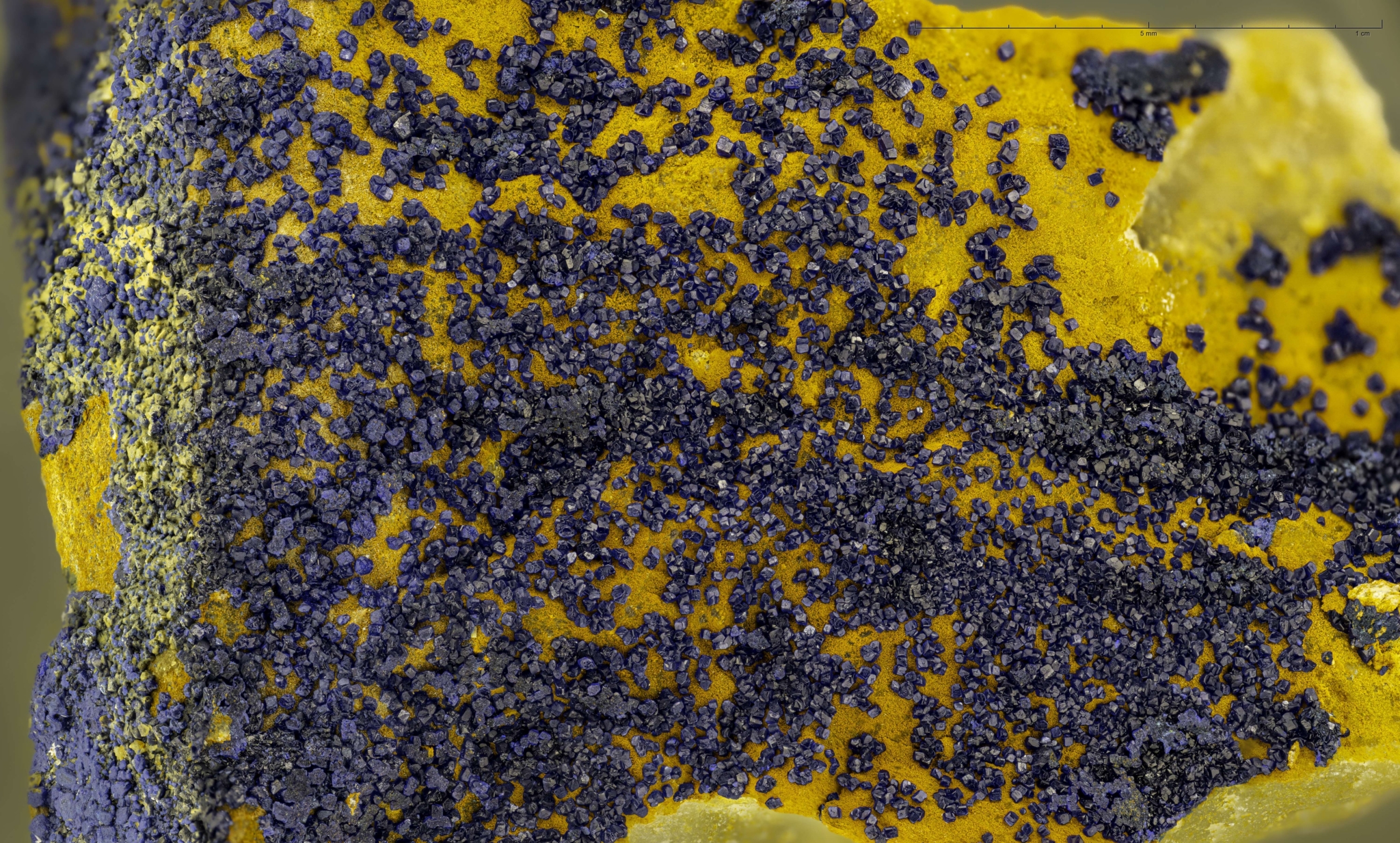
Dense micro-crystalline azurite crust blanketing a warm ochre matrix — a compact and richly colored piece from the Clara Mine.
Description

A compact specimen from the Clara Mine densely coated in a continuous crust of micro-crystalline azurite. The entire upper surface of the warm ochre matrix is blanketed in deep, saturated blue — the characteristic color of this copper carbonate hydroxide mineral. Despite the small scale of the individual crystals, the specimen reads as richly textured and intensely colored, with the warm buff matrix providing strong visual contrast. A fine representative piece from one of Europe's most celebrated secondary mineral localities.
The Clara Mine is one of Europe's most mineralogically diverse hydrothermal vein systems, where dozens of different copper-bearing mineral solutions have been slowly reacting with the limestone host rock for millions of years. As carbon dioxide-rich groundwater interacted with primary copper sulfides, the dissolved copper was gradually oxidised and combined with carbonate ions to precipitate azurite — coating every exposed surface of the matrix with a dense, even carpet of microscopic crystals. This drusy texture, where the crystals are too small to see individually with the naked eye but collectively create a velvet-like surface, is a hallmark of slow, sustained chemical deposition over tens of thousands of years. Each micro crystal is chemically identical to a museum-sized azurite — the same formula, the same deep blue color, the same internal geometry — just compressed to a fraction of a millimetre.

In the Clara Mine, deep in the Black Forest hills of Baden-Württemberg, the conditions for this kind of formation are near-ideal. The temperature is cool and constant year-round, the darkness absolute, and the chemical supply patient and uninterrupted. The warm ochre-buff matrix surrounding the azurite crust is typical of the mine's limestone host rock — a perfect neutral backdrop that has been framing the vivid blue crystals for as long as they have existed. The air inside would carry the faint mineral sharpness of damp stone and oxidising ore — cold, clean, ancient.
The name traces back over 2,500 years — from the ancient Persian 'lazhward', meaning blue, via the Arabic 'lazaward' and the Medieval Latin 'lazulum'. The same Persian root gave us the word lapis lazuli. Medieval painters ground azurite into pigment for blue paint, used widely in European panel paintings and illuminated manuscripts before synthetic blue pigments became available. The modern mineral name 'azurite' was formalized in 1824 by François Sulpice Beudant, replacing older names including 'chessylite' (after Chessy, France).
Azurite is a well-known secondary copper carbonate mineral occurring at hundreds of copper oxide deposits worldwide. However, Clara Mine specimens characterised by a dense, even micro-crystalline crust on warm-toned ochre matrix are a visually distinct type rarely replicated from other localities. The Clara Mine remains one of Europe's most important reference sites for secondary copper mineralogy, and its azurite consistently attracts collector attention for crystal quality and matrix aesthetics.

Own a Piece of Art

Clara Blue

Azurite mineral

Own a Piece of Art

Clara Blue

Azurite mineral

Select
Size
Size
Size
Size

Azurite

Mineral name

Artist Konstantinas
Title Clara Blue
Year 2026
Medium Fine Art Photography
Print Process Archival pigment print on Hahnemühle
Framing not framed
Available Print Size 29.7 × 42.0 cm (A3)48.3 × 32.9 cm (A3+)59.4 × 42 cm (A2)
Limited edition of 3 prints

This artwork is part of an exclusive limited-edition series exploring the hidden architecture of natural minerals. Each photograph reveals the intricate geometry, texture, and chromatic depth formed over millions of years, captured with museum-grade precision and printed to the highest archival standards.


Every print is produced using archival pigment inks on Hahnemühle fine art paper, ensuring exceptional color stability, tonal richness, and a lifespan of 60–100+ years under proper conditions. The surface structure of the paper enhances the mineral’s natural luminosity, giving the image a tactile, sculptural presence.

Special Edition A unique Artist’s Proof (AP 1/1) is available, featuring a mineral specimen presented together with the print. Its inclusion alongside the print transforms the work into a uniquely layered art object, where the physical mineral and its photographic interpretation amplify each other’s presence, rarity, and long-term artistic value.
Authenticity Each print is individually produced, inspected, and hand-signed by the artist. It is accompanied by a certificate of authenticity and is part of a strictly limited edition. Once the edition is sold out, no further copies will ever be made.
Cart (0)

Your cart is empty