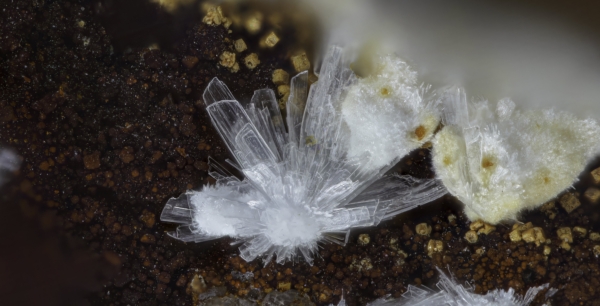
Clinoclase Azurite & Bariopharmacosiderite

The Trinity

Artistic name

Size
2.6 × 3.5 × 2.2 cm
Formula
$Cu_{3}(AsO_{4})(OH)_{3}$
Rarity
Rare
Curiosity
Astonishing

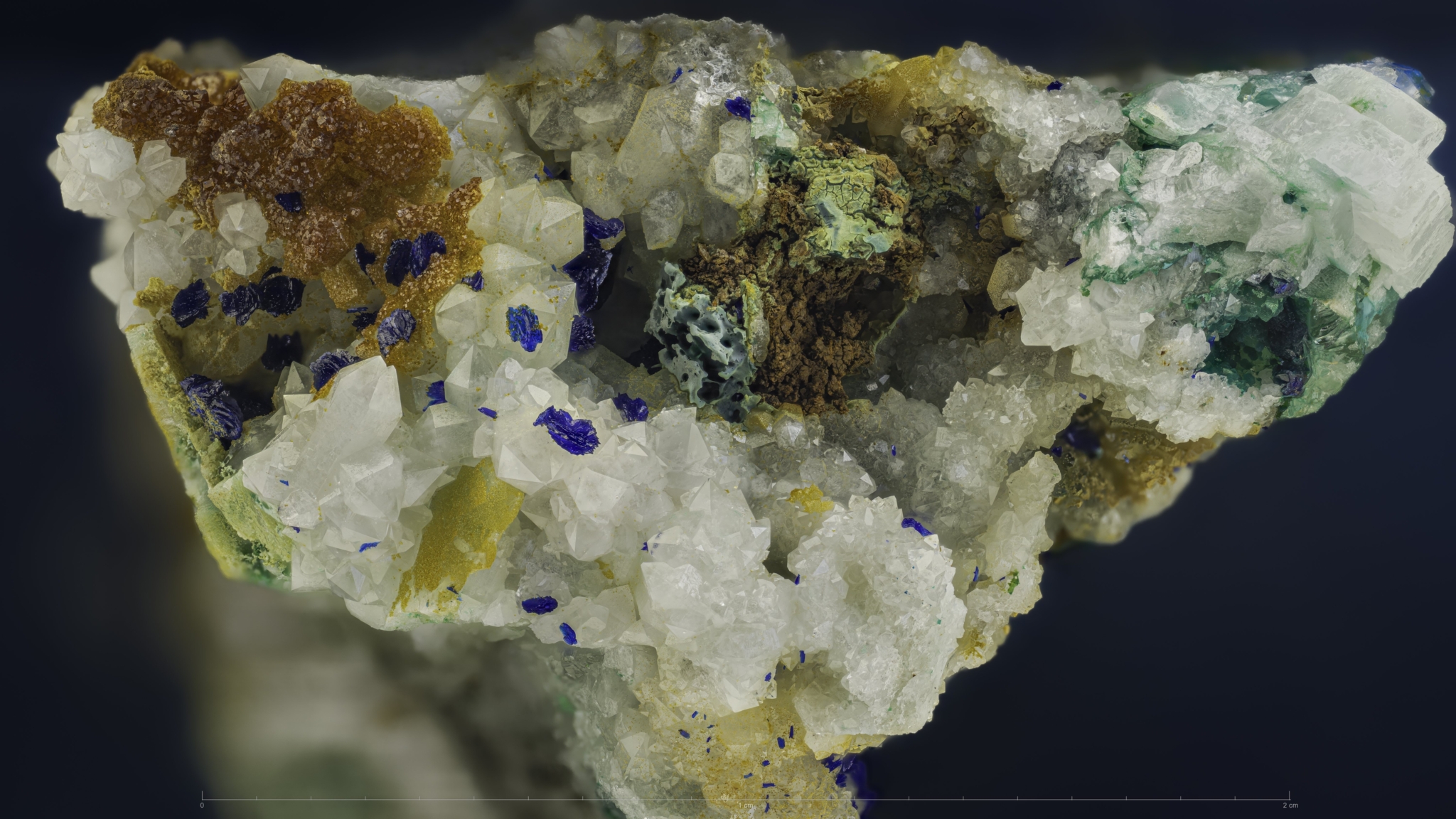
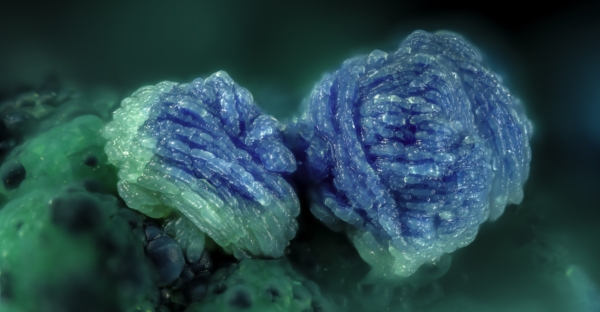
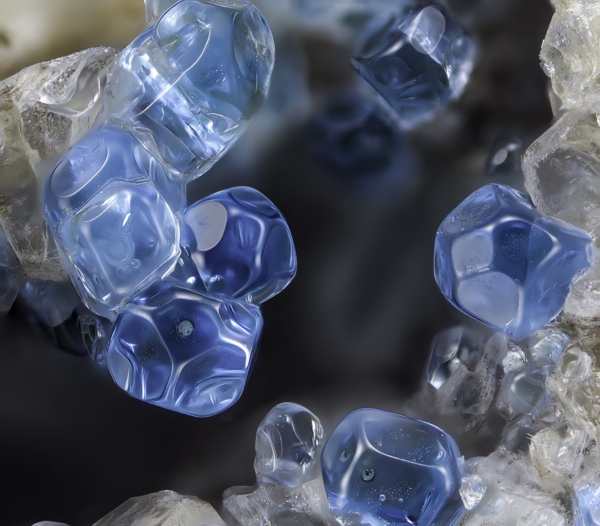
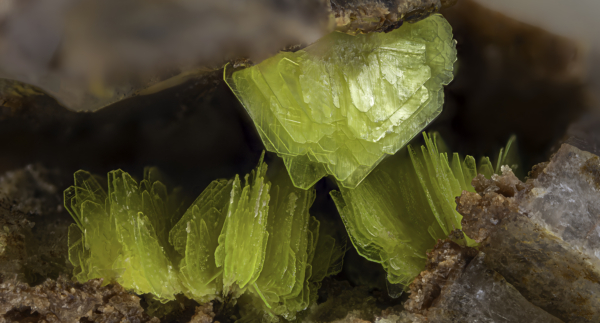
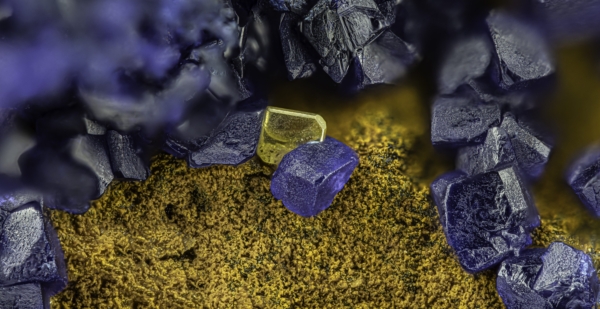
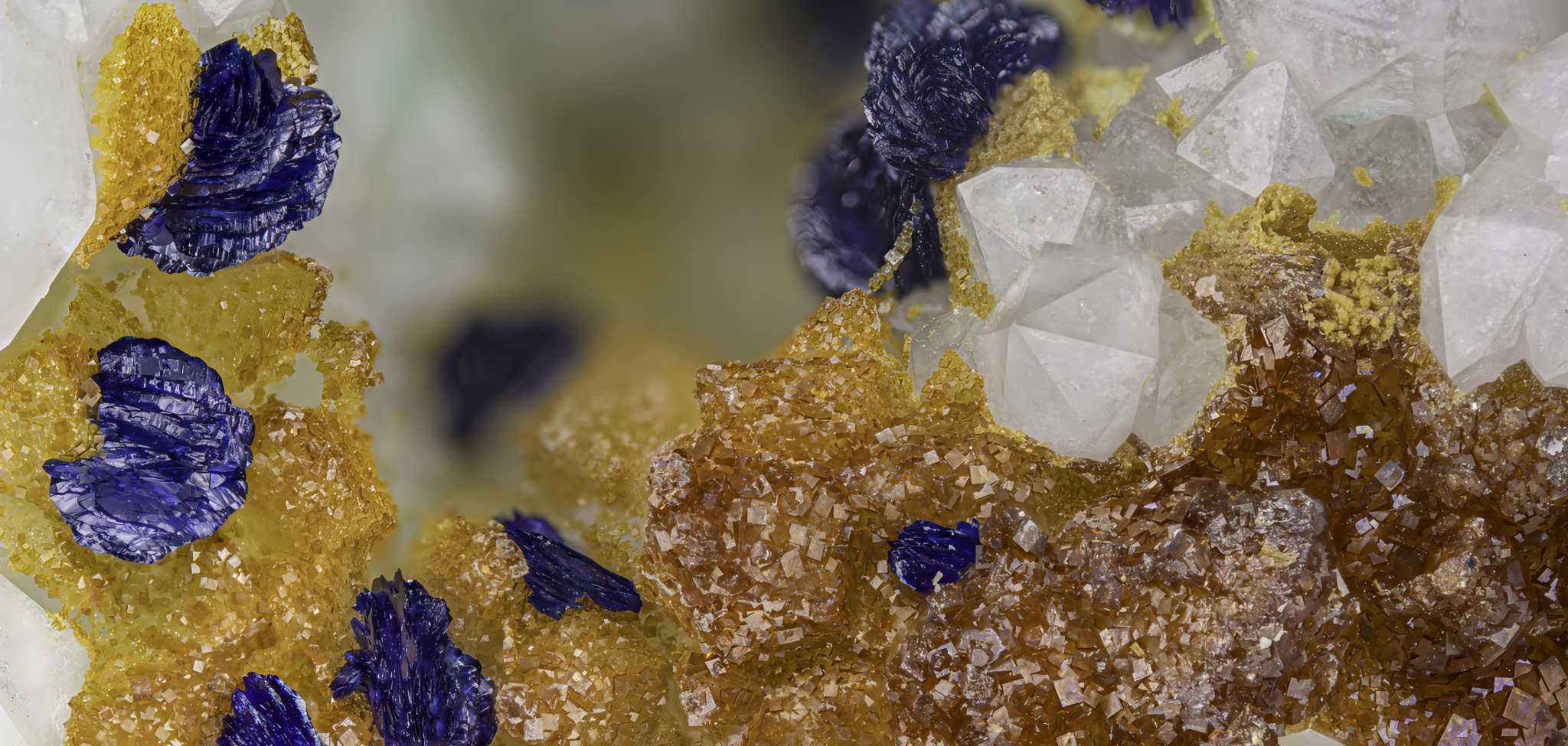
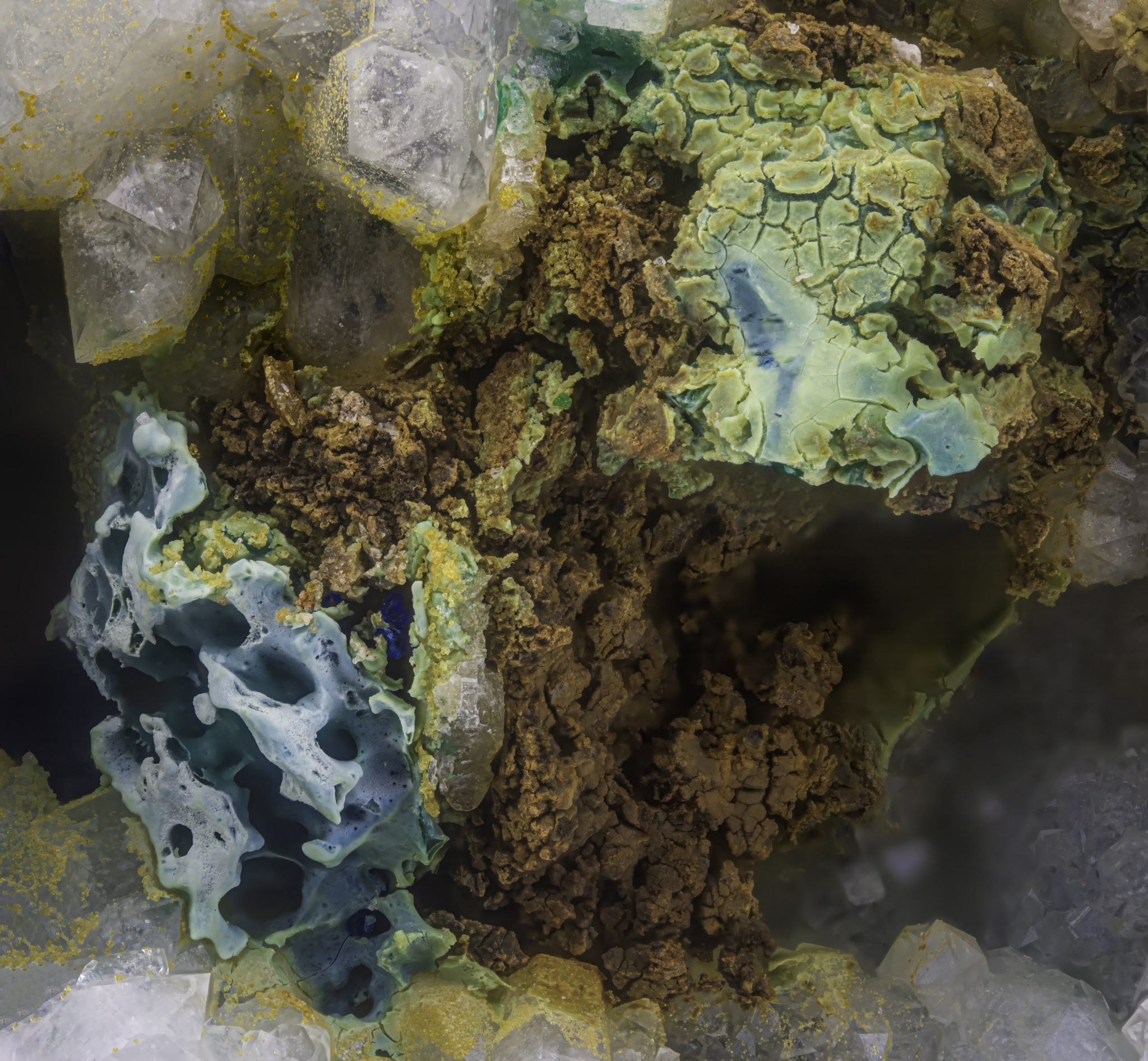
Excellent dark green clinoclase crystals paired with azurite and bariopharmacosiderite — an uncommon trio of arsenate species on a single matrix.
Description

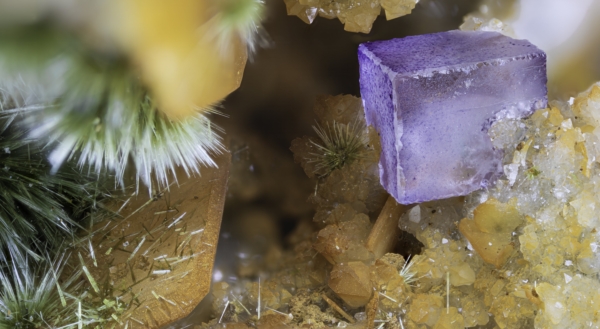
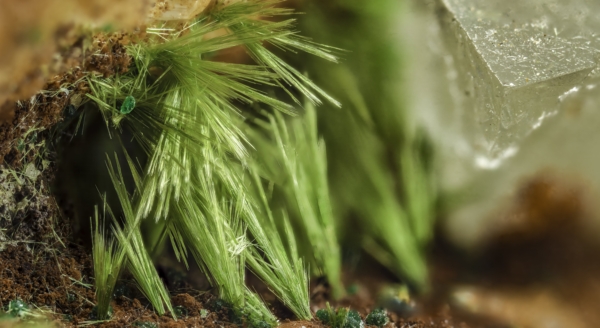
Excellent dark emerald-green clinoclase crystals — the rare copper arsenate hydroxide — paired with azurite and bariopharmacosiderite on natural matrix. Clinoclase specimens of this quality and coloration are uncommon; the presence of three distinct arsenate species on a single piece makes this a standout example of arsenate mineral diversity.
Underground in the Clara Mine, sealed chambers filled with copper and arsenic-rich fluids over millions of years. As chemistry slowly shifted — temperature, acidity, the presence of different ions — three entirely different minerals crystallized one after another in the same space. It's like watching three separate chemical reactions happen in the same locked room, each leaving its own distinct crystal signature. The three minerals didn't all form at once — each grew during a different chemical phase over a combined span of roughly 100,000 to 500,000 years, as the underground chemistry of Clara Mine slowly shifted.

Sealed underground for millions of years, the Clara Mine's oxidation chambers were among the quietest places on Earth — no airflow, no sound from the surface, just the barely perceptible chemistry of minerals reacting with water in total darkness. The air, trapped for eons, would have had the sharp mineral scent of copper arsenates — a faint, clean metallic edge, like the smell inside an old bronze vessel that has been sealed for centuries.
Clinoclase was named in 1832 from the Greek 'klinein' (to incline) and 'klasis' (fracture), referring to its steeply oblique cleavage — a crystallographic feature early mineralogists found distinctly unusual. Azurite: named from Persian 'lazhward' (blue) — see separate entry. Bariopharmacosiderite belongs to the pharmacosiderite group, whose name combines the Greek 'pharmakon' (poison) and 'sideros' (iron), given in 1818 because the mineral occurs in arsenical iron ore — toxic ground. The prefix 'bario-' indicates that barium dominates the structure in place of the more common potassium.
Clinoclase is a rare copper arsenate hydroxide found at only a limited number of oxidized copper-arsenide deposits worldwide, with the Clara Mine among the finest known localities. The simultaneous presence of three distinct arsenate species — clinoclase, azurite, and bariopharmacosiderite — on a single natural matrix constitutes an uncommon and scientifically noteworthy paragenetic assemblage.

Own a Piece of Art

The Trinity

Clinoclase Azurite & Bariopharmacosiderite mineral
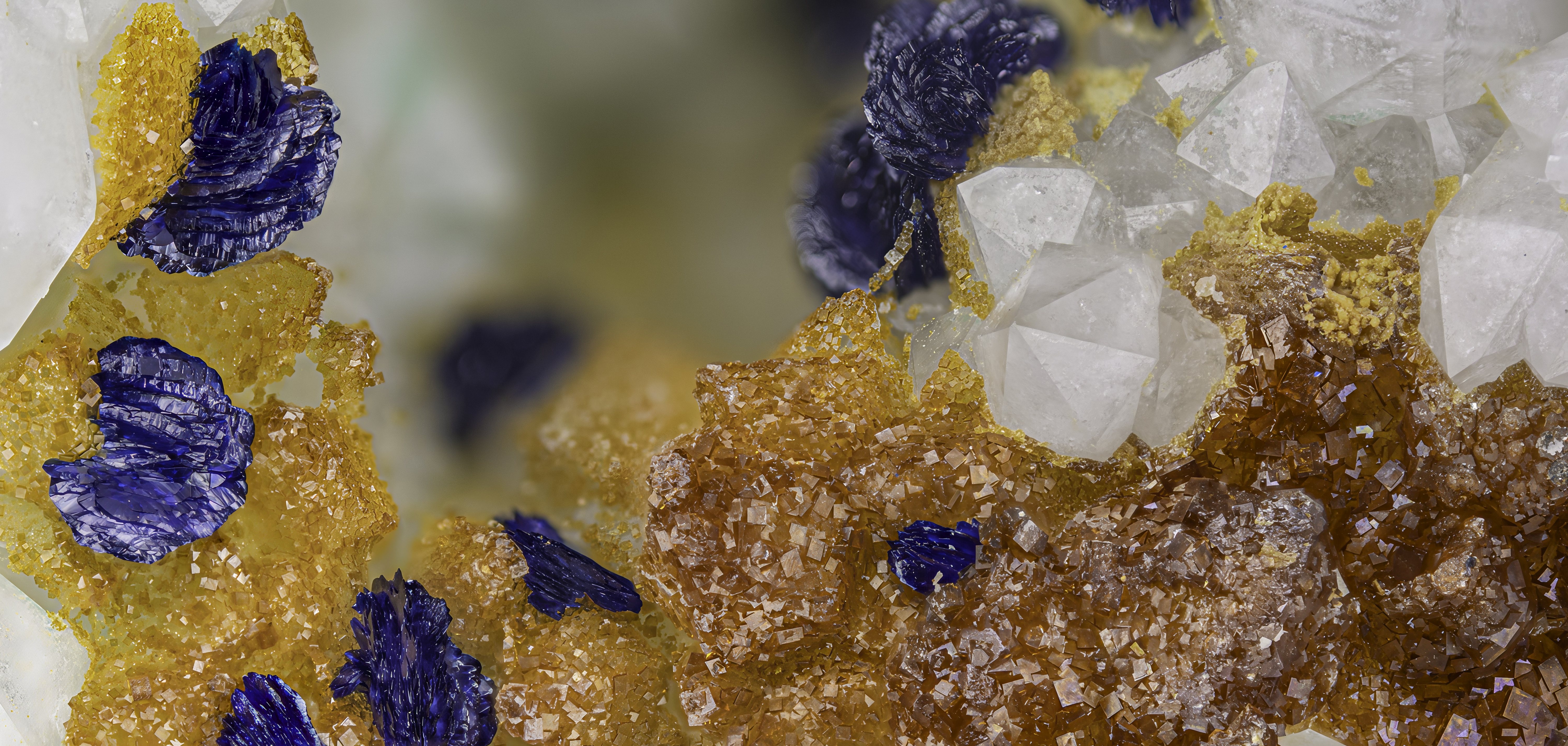
Own a Piece of Art

The Trinity

Clinoclase Azurite & Bariopharmacosiderite mineral

Select
Size
Size
Size
Size

Clinoclase Azurite & Bariopharmacosiderite

Mineral name

Artist Konstantinas
Title The Trinity
Year 2024
Medium Fine Art Photography
Print Process Archival pigment print on Hahnemühle
Framing not framed
Available Print Size 29.7 × 42.0 cm (A3)48.3 × 32.9 cm (A3+)59.4 × 42 cm (A2)
Limited edition of 3 prints

This artwork is part of an exclusive limited-edition series exploring the hidden architecture of natural minerals. Each photograph reveals the intricate geometry, texture, and chromatic depth formed over millions of years, captured with museum-grade precision and printed to the highest archival standards.


Every print is produced using archival pigment inks on Hahnemühle fine art paper, ensuring exceptional color stability, tonal richness, and a lifespan of 60–100+ years under proper conditions. The surface structure of the paper enhances the mineral’s natural luminosity, giving the image a tactile, sculptural presence.

Special Edition A unique Artist’s Proof (AP 1/1) is available, featuring a mineral specimen presented together with the print. Its inclusion alongside the print transforms the work into a uniquely layered art object, where the physical mineral and its photographic interpretation amplify each other’s presence, rarity, and long-term artistic value.
Authenticity Each print is individually produced, inspected, and hand-signed by the artist. It is accompanied by a certificate of authenticity and is part of a strictly limited edition. Once the edition is sold out, no further copies will ever be made.

Similar Minerals

Cart (0)

Your cart is empty