Thomsenolite

Polar Ice

Artistic name

Size
2.1 × 3.5 × 1.6 cm
Formula
$NaCa[AlF_{6}]\cdot H_{2}O$
Rarity
Common
Curiosity
Interesting

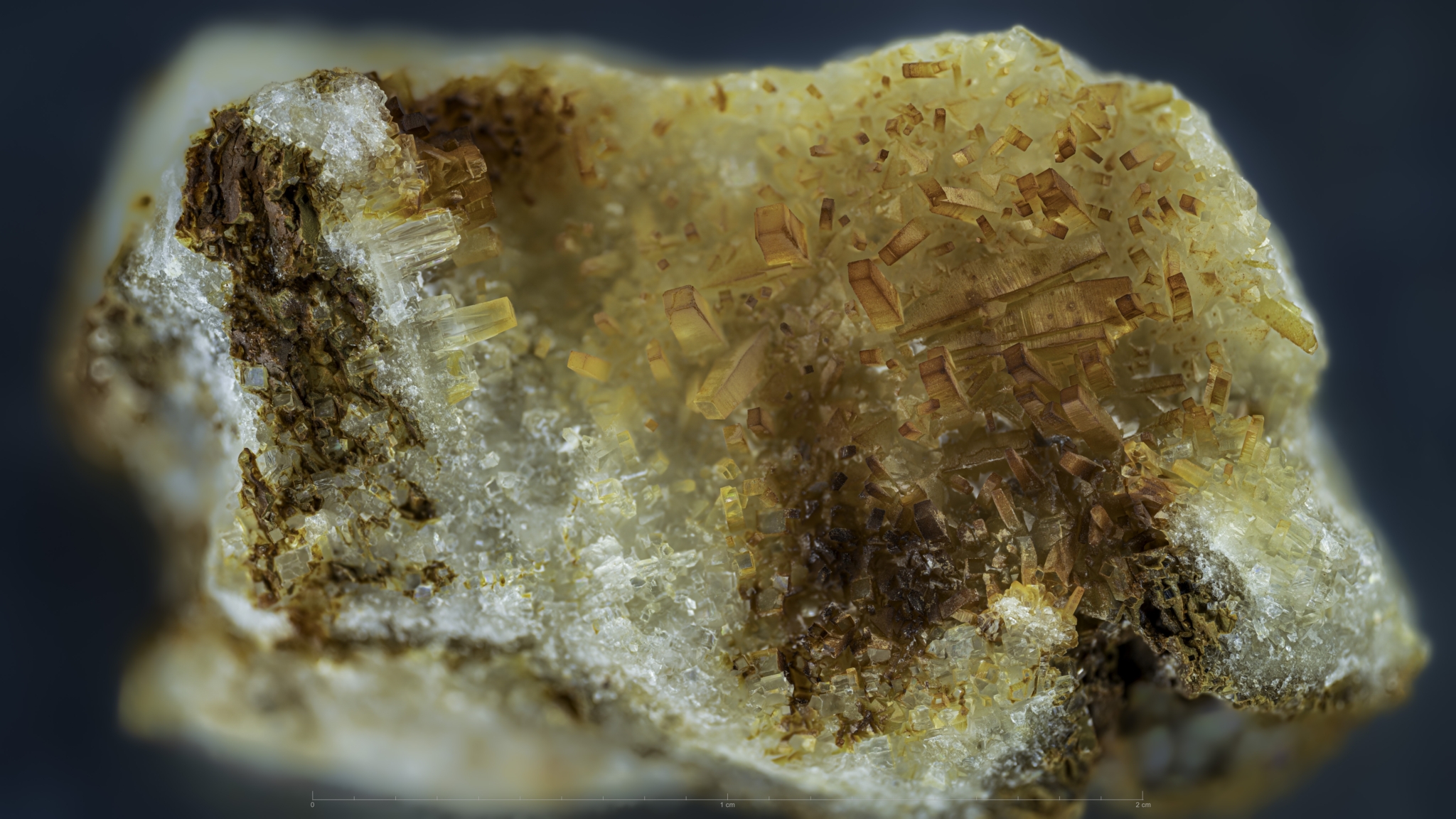
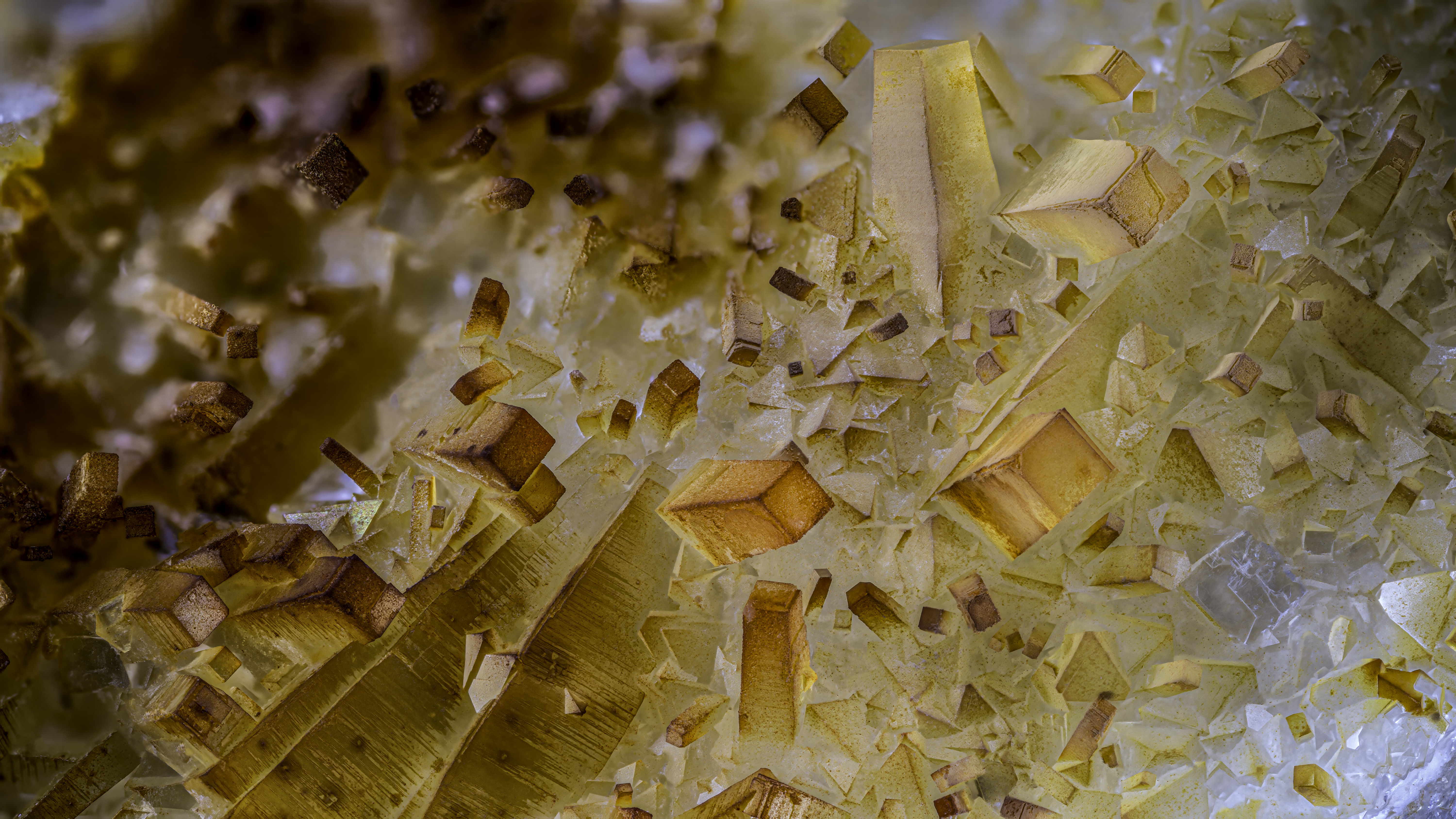
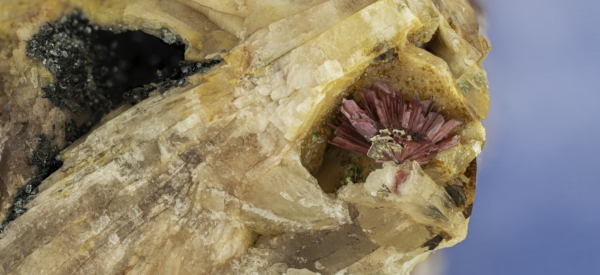
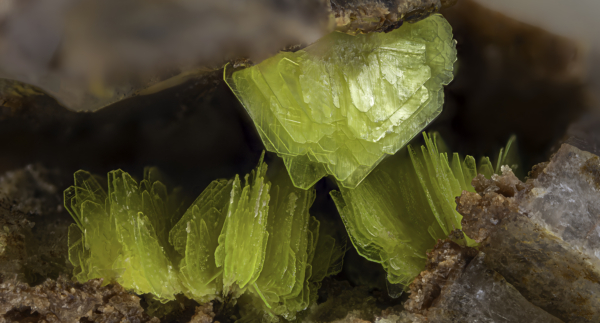
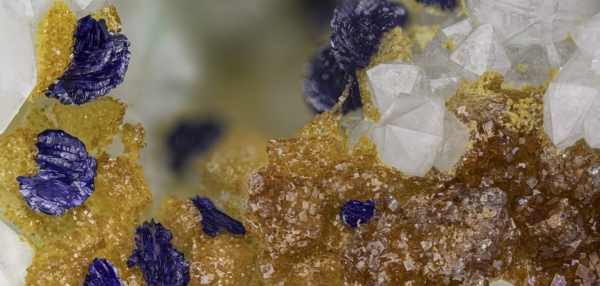
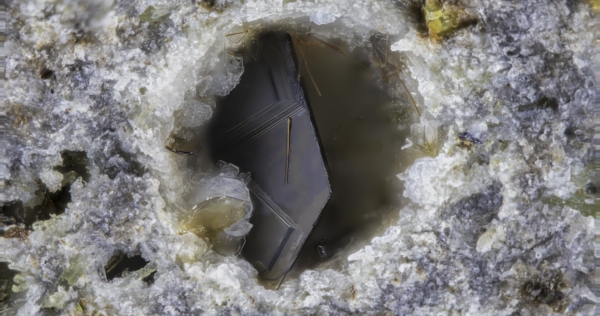
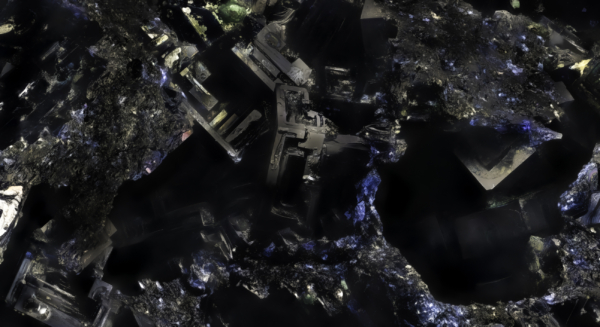
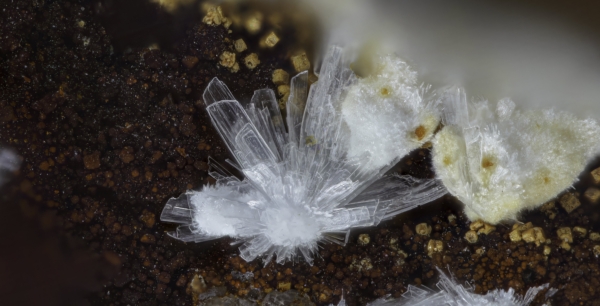
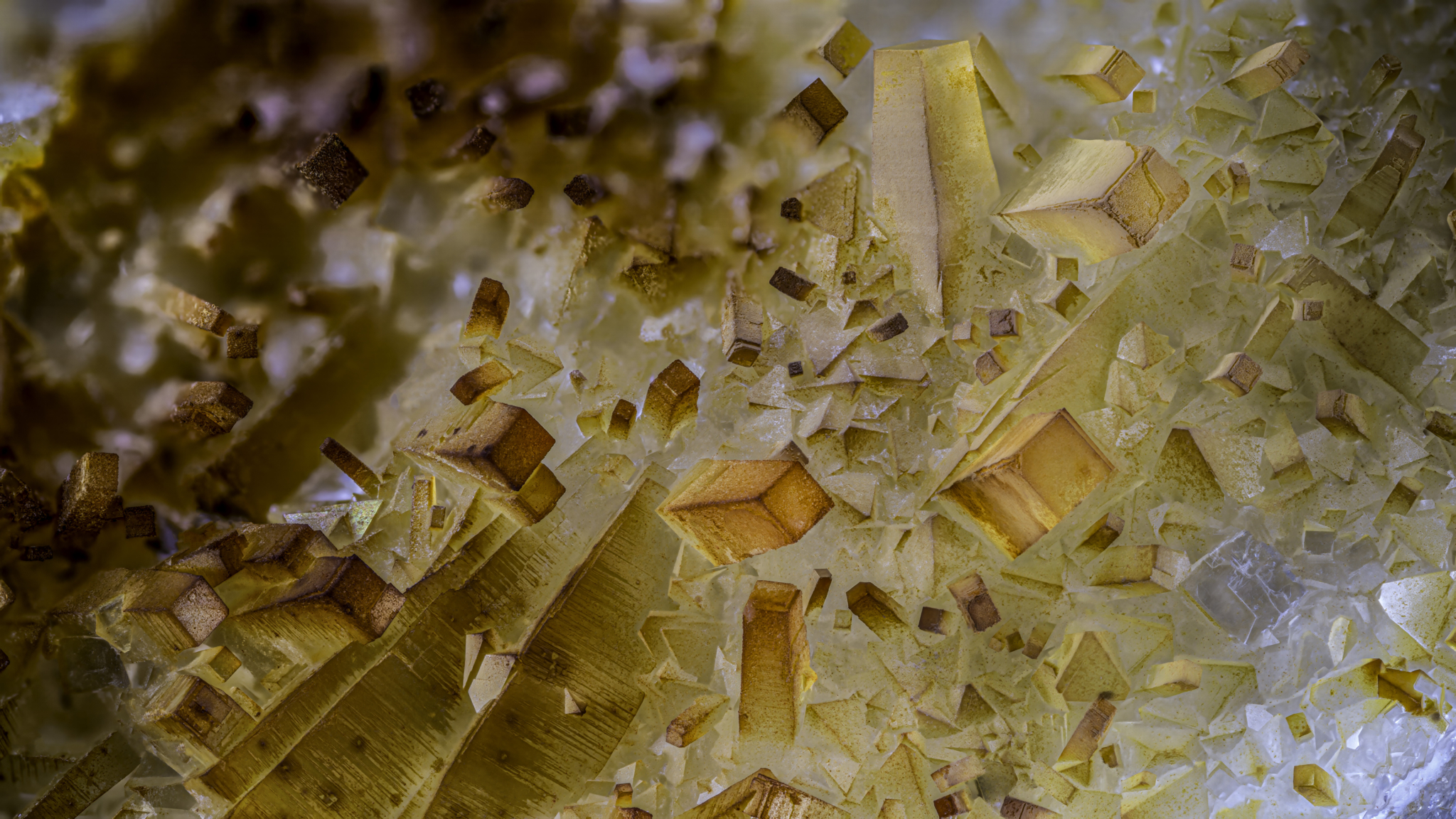
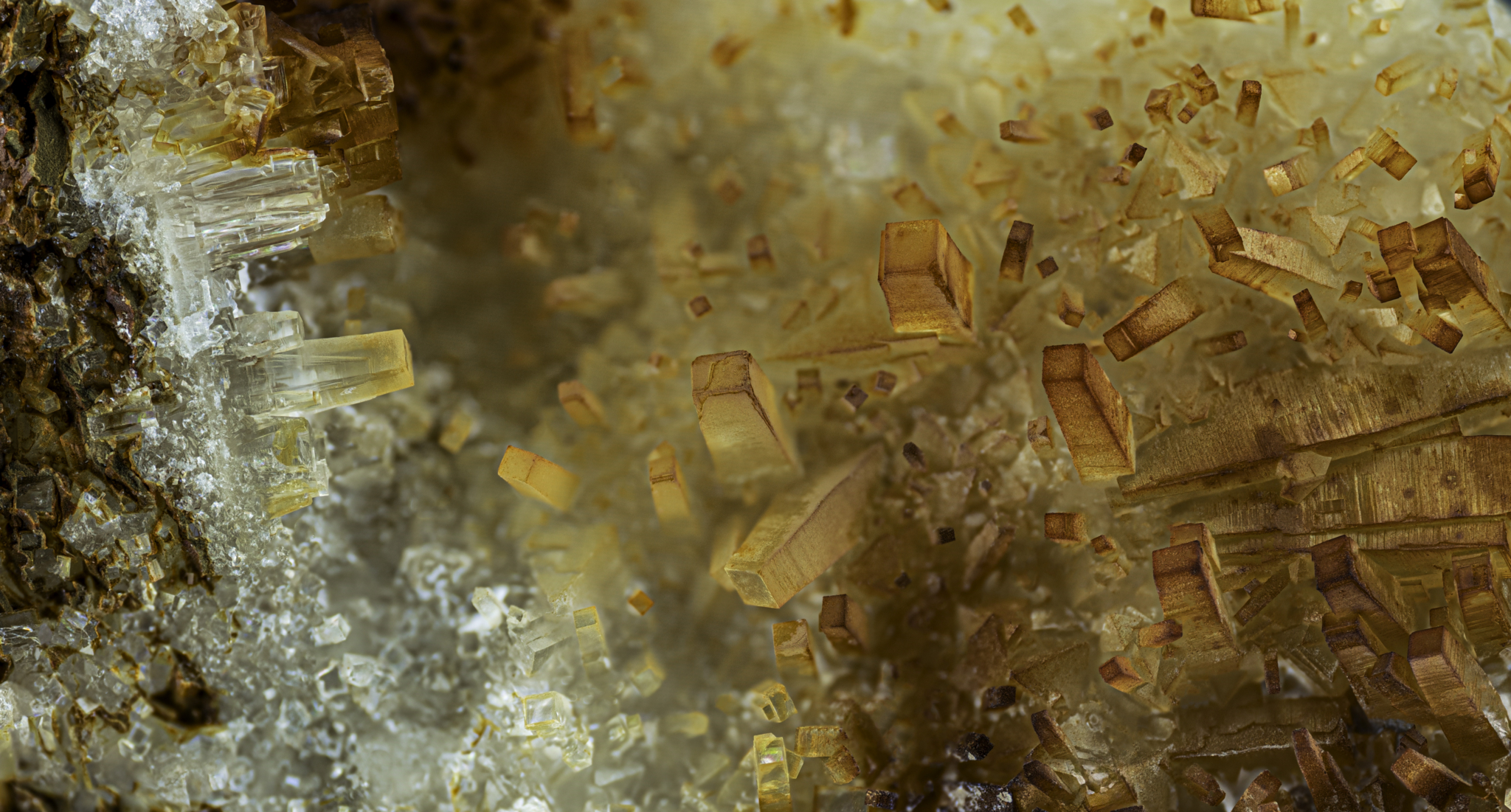
Well-formed white to colorless thomsenolite crystals rising freely from matrix, partially dusted in golden limonite from the type locality.
Description

Freestanding thomsenolite crystals rising elegantly from matrix rock, reaching up to 5 mm in size. The white to colorless, well-formed crystals of this sodium-calcium aluminum fluoride hydrate display a partial golden coating of secondary limonite, adding warm tonal contrast. A richly detailed specimen of a rare halide mineral.
Greenland holds one of the strangest mineral deposits on Earth — a mass of cryolite, a rare fluorine mineral used to smelt aluminium. As hot fluids worked their way through cracks in this 80-million-year-old deposit, they left behind thomsenolite crystals like white frost clinging to the walls of underground chambers. Growing slowly from hydrothermal fluids over an estimated 1 to 5 million years, these crystals had all the time in the world — filling underground pockets grain by grain inside a deposit that itself took millions of years to form.

Deep inside the Greenlandic cryolite deposit, the environment was cold and profoundly still. Hydrothermal fluids moved almost imperceptibly through narrow rock channels — the sound, if any, would have been a barely audible, slow seeping hiss. The air had a clean, sharp mineral bite to it, like cold wet stone near a waterfall, with a faint chemical edge from the fluorine-rich environment.
Named in 1878 in honor of Hans Peter Jørgen Julius Thomsen (1826–1909), Professor of Chemistry at the University of Copenhagen and one of the founders of modern thermochemistry. Thomsen is best known outside mineralogy for the Thomsen-Berthelot principle and for his landmark measurements of chemical reaction heats. His connection to thomsenolite is direct — he was among the first chemists to study the Ivigtut cryolite deposit in Greenland, from which thomsenolite was described.
Thomsenolite is a sodium-calcium aluminum fluoride hydrate primarily known from the Ivigtut cryolite deposit in Greenland. Although the closure of that historic mine has halted new production, existing specimens remain accessible on the collector market at reasonable prices, and the mineral is considered obtainable rather than genuinely rare in mineralogical terms.

Own a Piece of Art

Polar Ice

Thomsenolite mineral

Own a Piece of Art

Polar Ice

Thomsenolite mineral

Select
Size
Size
Size
Size

Thomsenolite

Mineral name

Artist Konstantinas
Title Polar Ice
Year 2026
Medium Fine Art Photography
Print Process Archival pigment print on Hahnemühle
Framing not framed
Available Print Size 29.7 × 42.0 cm (A3)48.3 × 32.9 cm (A3+)59.4 × 42 cm (A2)
Limited edition of 3 prints

This artwork is part of an exclusive limited-edition series exploring the hidden architecture of natural minerals. Each photograph reveals the intricate geometry, texture, and chromatic depth formed over millions of years, captured with museum-grade precision and printed to the highest archival standards.


Every print is produced using archival pigment inks on Hahnemühle fine art paper, ensuring exceptional color stability, tonal richness, and a lifespan of 60–100+ years under proper conditions. The surface structure of the paper enhances the mineral’s natural luminosity, giving the image a tactile, sculptural presence.

Special Edition A unique Artist’s Proof (AP 1/1) is available, featuring a mineral specimen presented together with the print. Its inclusion alongside the print transforms the work into a uniquely layered art object, where the physical mineral and its photographic interpretation amplify each other’s presence, rarity, and long-term artistic value.
Authenticity Each print is individually produced, inspected, and hand-signed by the artist. It is accompanied by a certificate of authenticity and is part of a strictly limited edition. Once the edition is sold out, no further copies will ever be made.
Cart (0)

Your cart is empty