Erythrite

Cobalt's Rose

Artistic name

Size
2.2 × 3 × 2 cm
Formula
$Co_{3}(AsO_{4})_{2}\cdot 8H_{2}O$
Rarity
Rare
Curiosity
Surprising

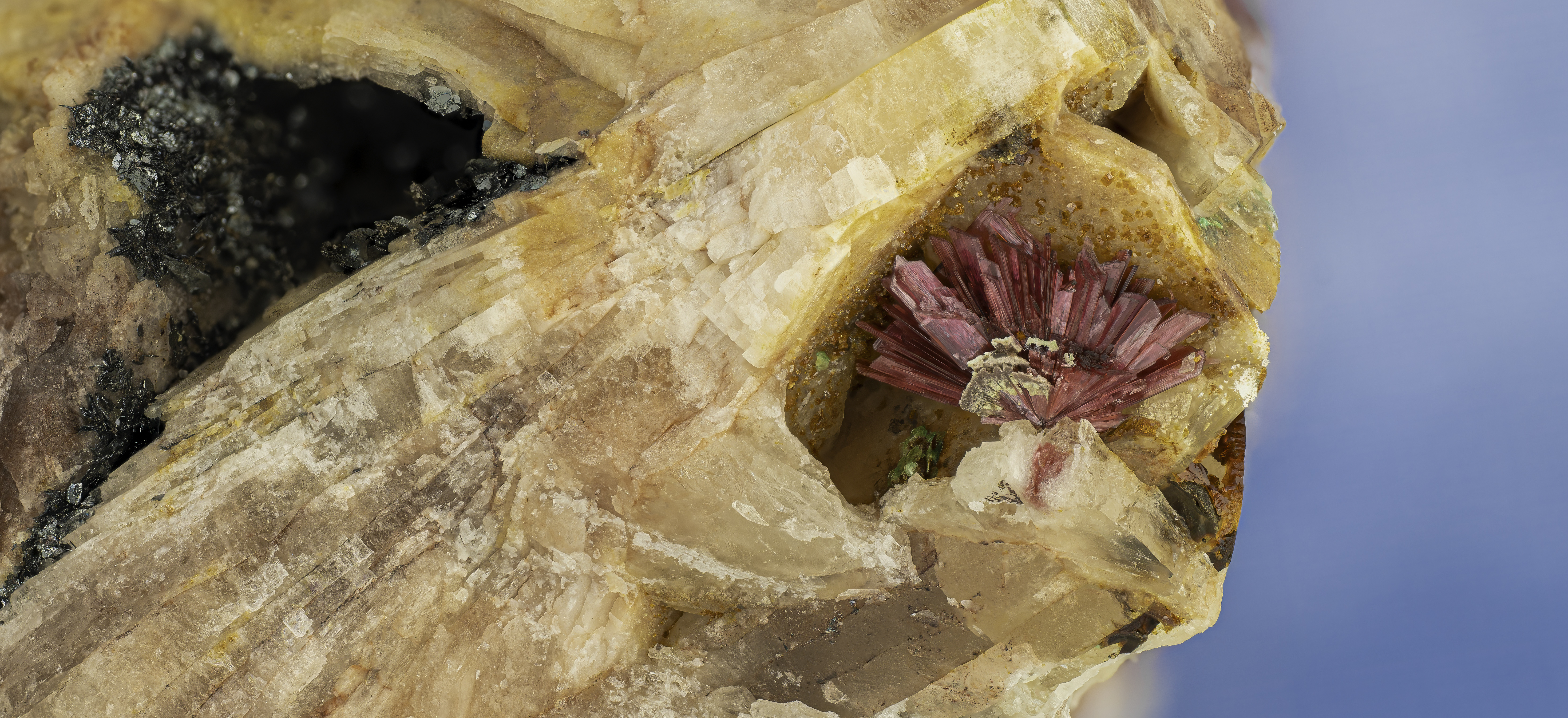
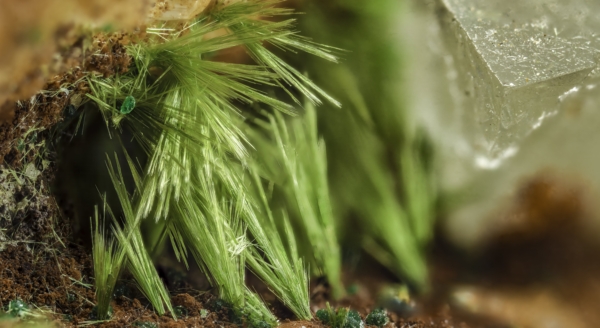
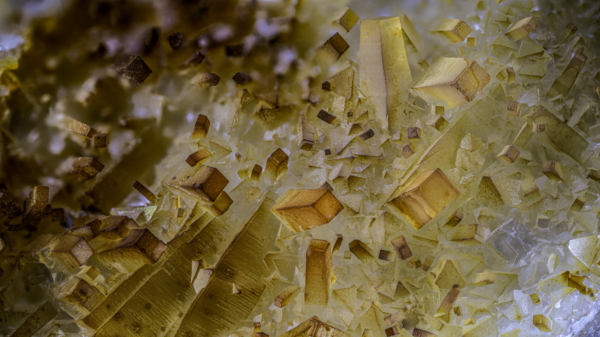
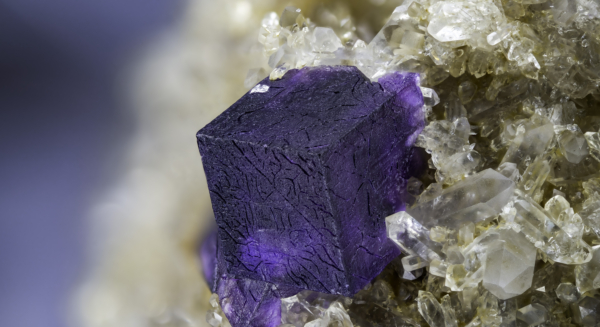
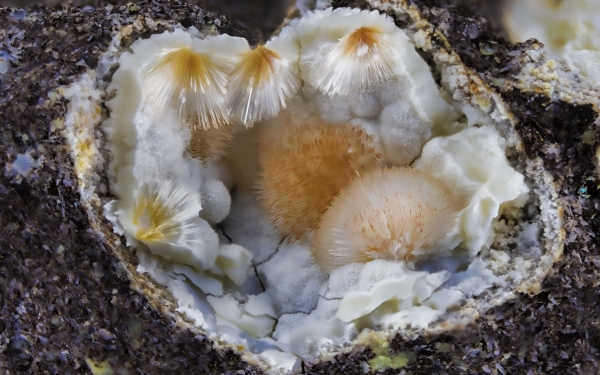
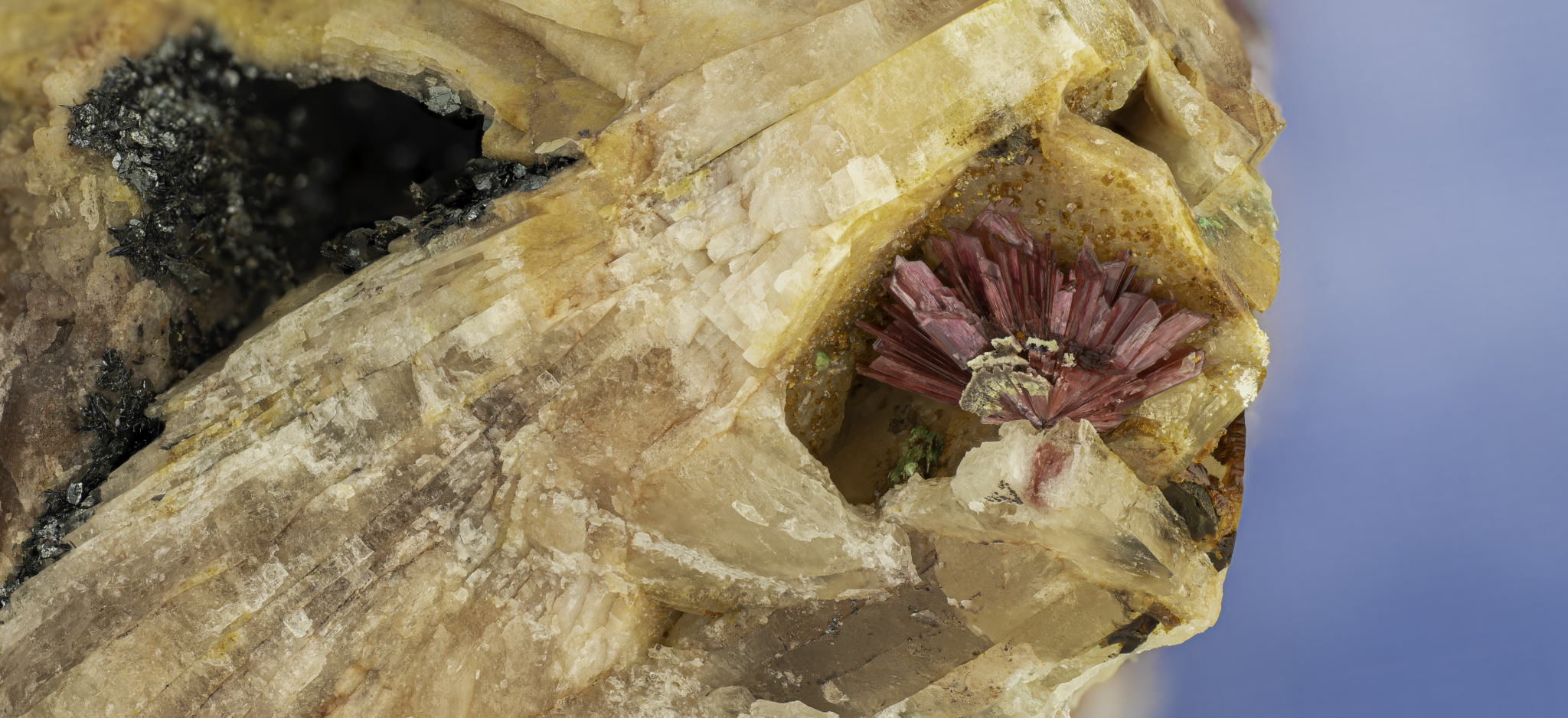
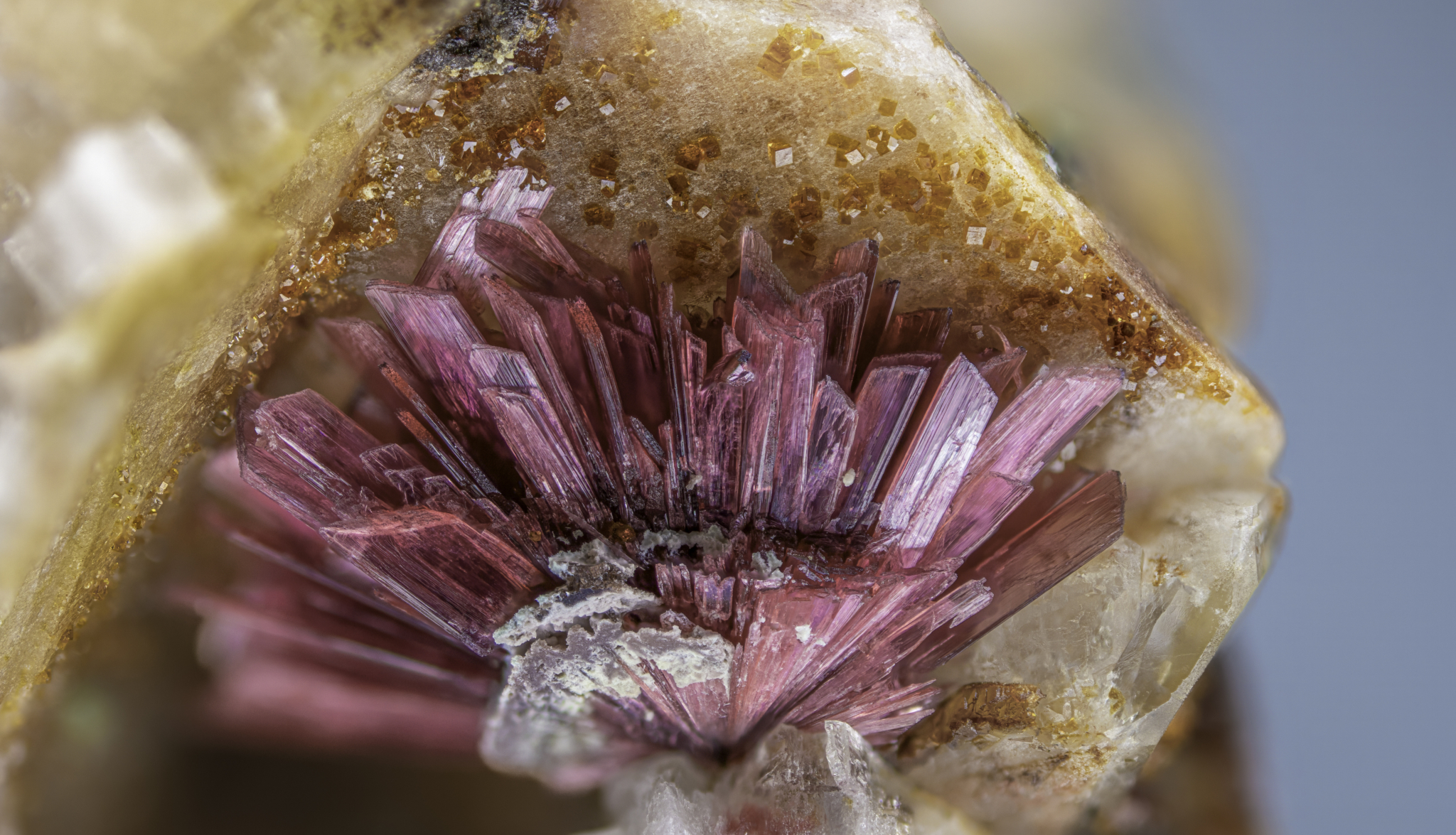
Exceptionally well-formed deep pink blade crystals of cobalt arsenate erythrite, accompanied by bariopharmacosiderite and zeunerite on matrix.
Description

Exceptionally well-formed, blade-like erythrite crystals in their signature deep cobalt-pink color, accompanied by bariopharmacosiderite and zeunerite on natural matrix. This hydrated cobalt arsenate is a species of increasing rarity in specimens of such crystal definition; a collector piece of both aesthetic and mineralogical distinction.
Deep in an old German mine shaft, cobalt minerals were slowly dissolving as water trickled through the rock over millions of years. That cobalt-rich water, when it ran out of room, began to crystallize — forming vivid pink blades like a tiny forest frozen in time. The mine's chemistry turned invisible dissolved metal into something visually stunning. The vivid pink crystals took anywhere from 10,000 to 200,000 years to reach their current form — a slow, patient rebuilding of dissolved cobalt into something entirely new.

Inside the Schmiedestollen shaft, the crystal growth happened in near-complete silence — just the rare, distant tick of water on stone. The air would have had a faint sharp edge to it: arsenic compounds in the ore give off a subtle smell reminiscent of garlic, mixed with the cool dampness of a sealed underground space.
Named in 1832 by French mineralogist François Sulpice Beudant (1787–1850) from the Greek 'erythros', meaning red — though the mineral is actually an intense violet-pink rather than true red. Beudant was a prolific namer of minerals; he also assigned the modern name to azurite the same year. The vivid color of erythrite was historically used as a field indicator for cobalt ore deposits, earning it the prospectors' nickname 'cobalt bloom'.
Erythrite occurs at a limited number of cobalt-arsenide deposits worldwide. Well-formed blade crystals in the characteristic vivid cobalt-pink color, especially from European localities such as the Schmiedestollen at Wittichen, are increasingly difficult to obtain as productive pockets are exhausted — a growing rarity among arsenate collector pieces.

Own a Piece of Art

Cobalt's Rose

Erythrite mineral

Own a Piece of Art

Cobalt's Rose

Erythrite mineral

Select
Size
Size
Size
Size

Erythrite

Mineral name

Artist Konstantinas
Title Cobalt's Rose
Year 2026
Medium Fine Art Photography
Print Process Archival pigment print on Hahnemühle
Framing not framed
Available Print Size 29.7 × 42.0 cm (A3)48.3 × 32.9 cm (A3+)59.4 × 42 cm (A2)
Limited edition of 3 prints

This artwork is part of an exclusive limited-edition series exploring the hidden architecture of natural minerals. Each photograph reveals the intricate geometry, texture, and chromatic depth formed over millions of years, captured with museum-grade precision and printed to the highest archival standards.


Every print is produced using archival pigment inks on Hahnemühle fine art paper, ensuring exceptional color stability, tonal richness, and a lifespan of 60–100+ years under proper conditions. The surface structure of the paper enhances the mineral’s natural luminosity, giving the image a tactile, sculptural presence.

Special Edition A unique Artist’s Proof (AP 1/1) is available, featuring a mineral specimen presented together with the print. Its inclusion alongside the print transforms the work into a uniquely layered art object, where the physical mineral and its photographic interpretation amplify each other’s presence, rarity, and long-term artistic value.
Authenticity Each print is individually produced, inspected, and hand-signed by the artist. It is accompanied by a certificate of authenticity and is part of a strictly limited edition. Once the edition is sold out, no further copies will ever be made.
Cart (0)

Your cart is empty