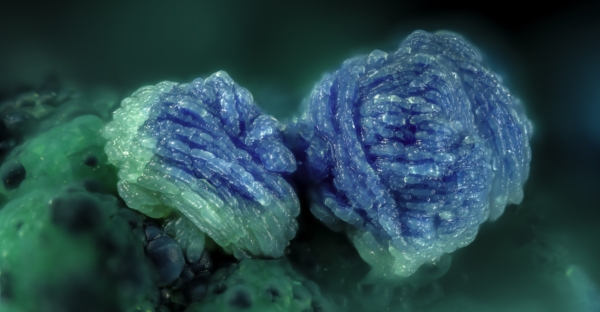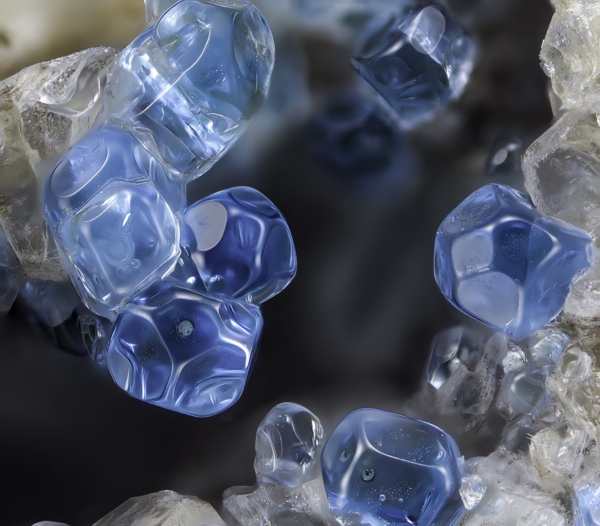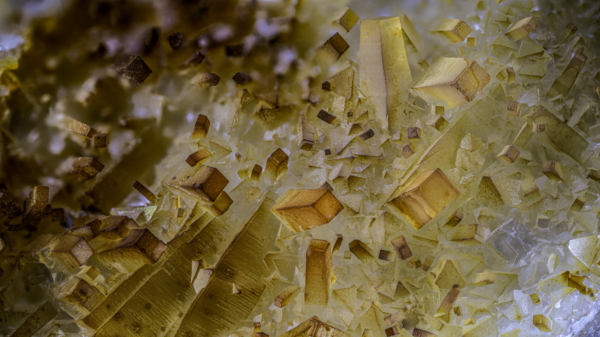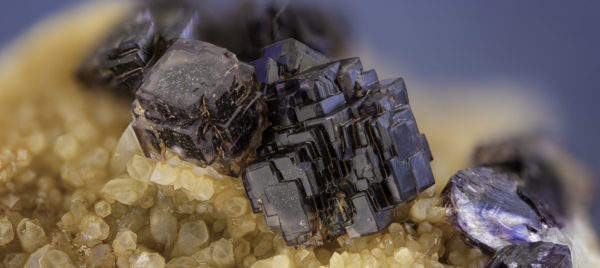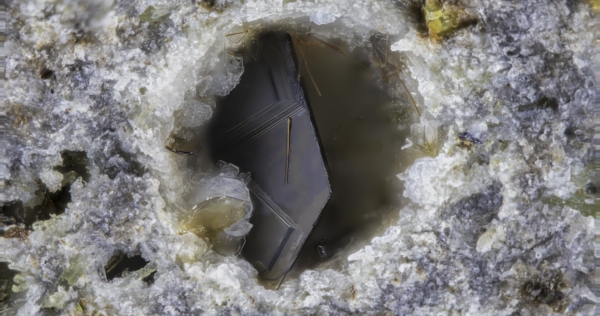
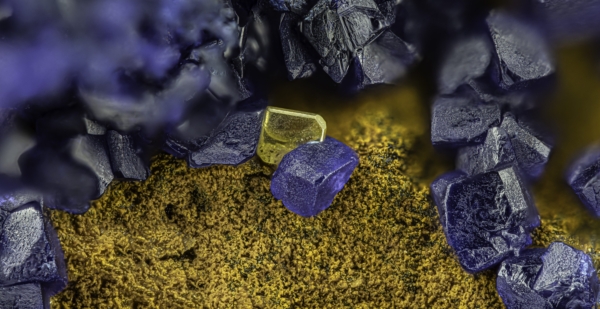
Phillipsite, Calcite

Cave Twins

Artistic name

Formula
$K_{2}(Ca,Na_{2})_{2}Al_{6}Si_{10}O_{32}\cdot 12H_{2}O / CaCO_{3}$
Rarity
Uncommon
Curiosity
Surprising

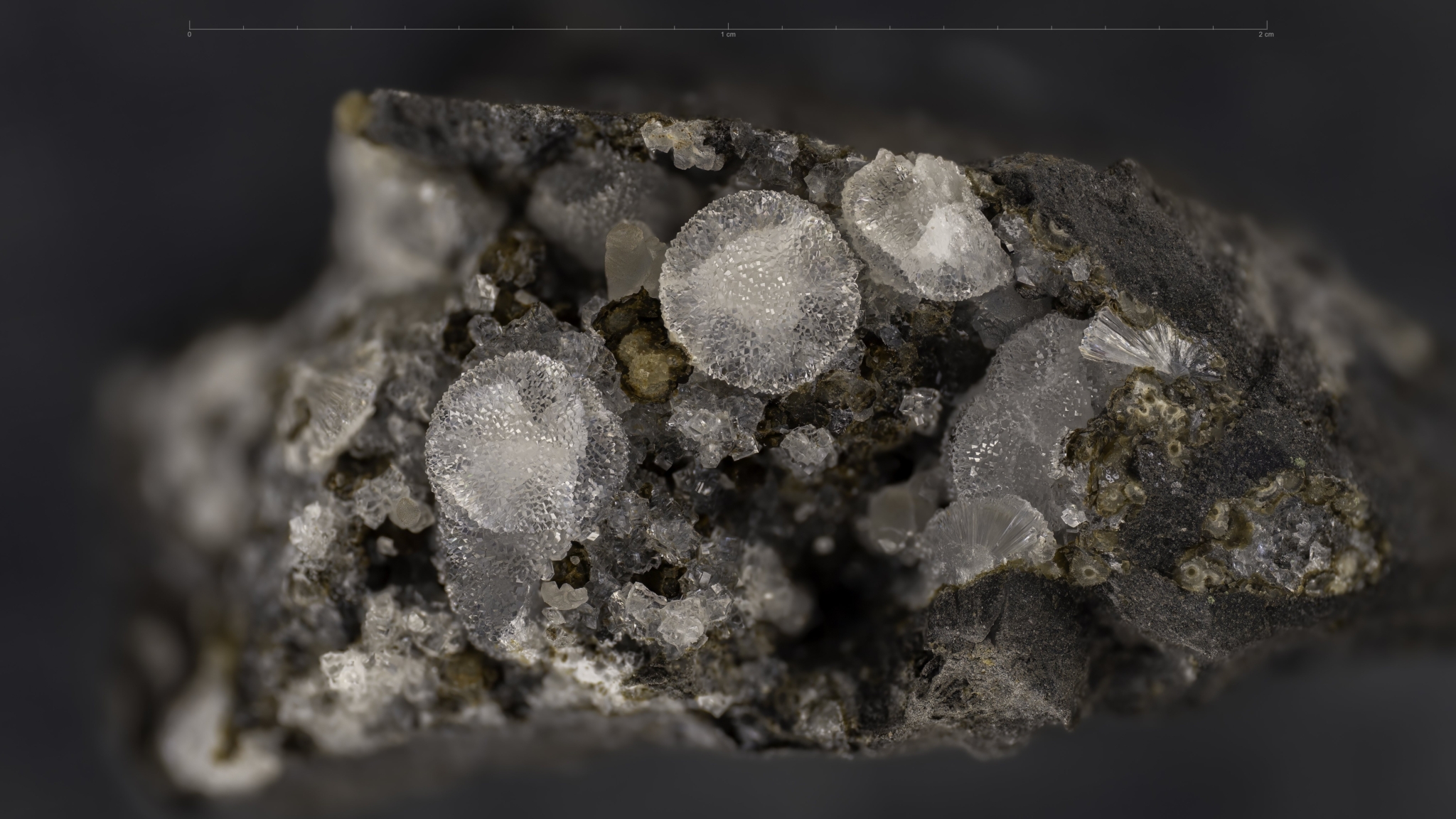
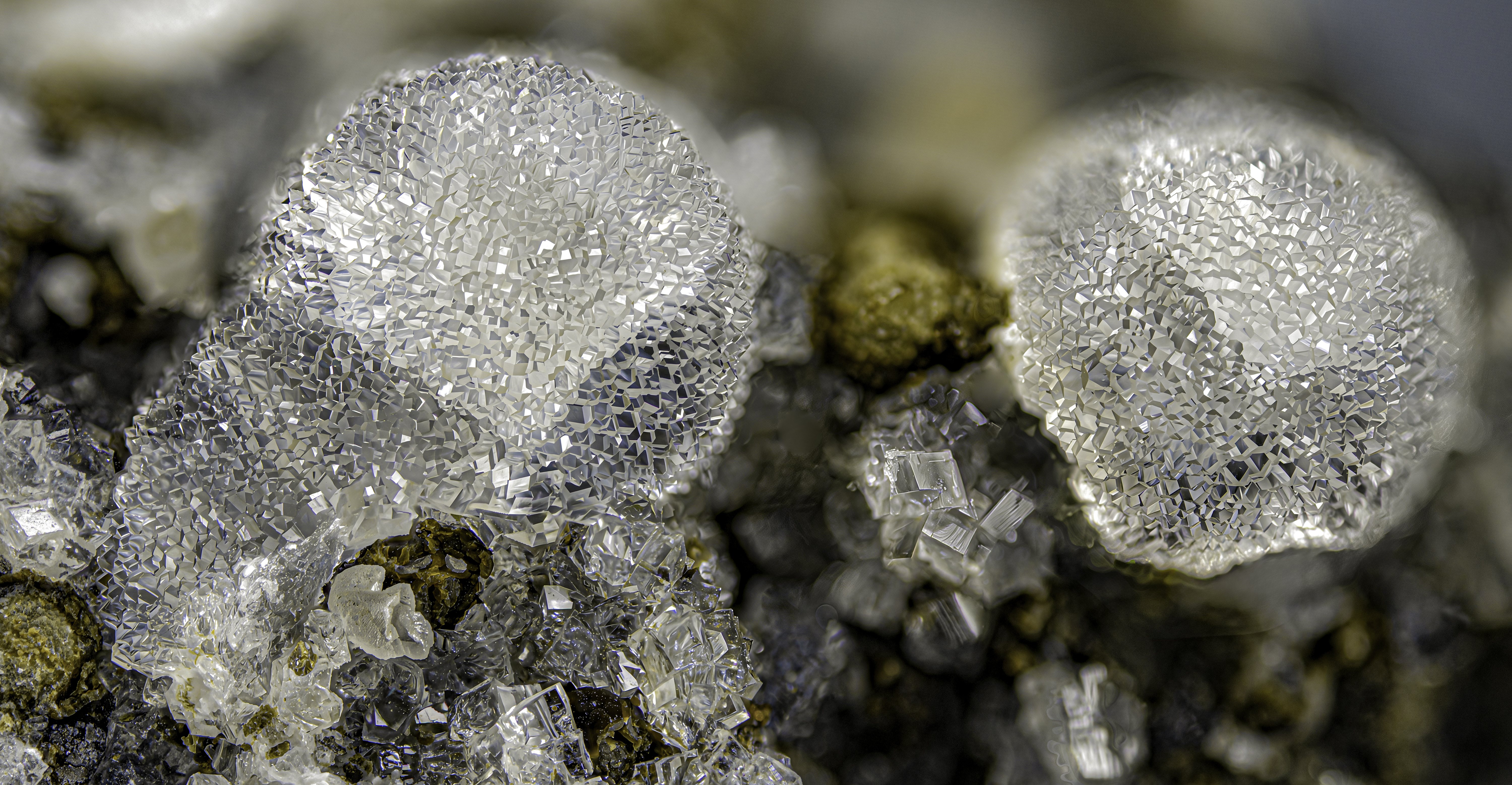
A combination specimen of cruciform phillipsite zeolite twins alongside white calcite, illustrating sequential low-temperature volcanic crystallization.
Description

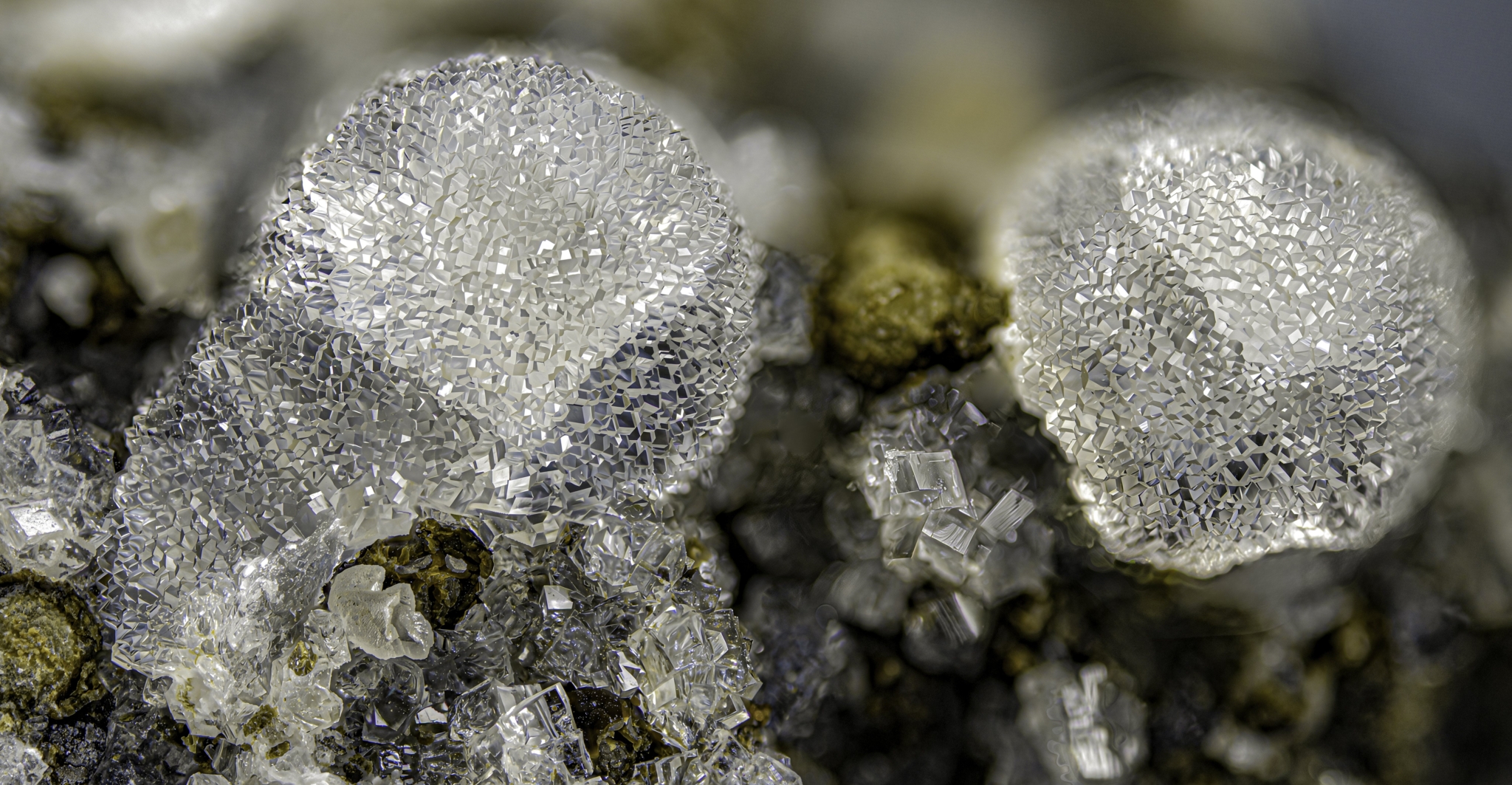
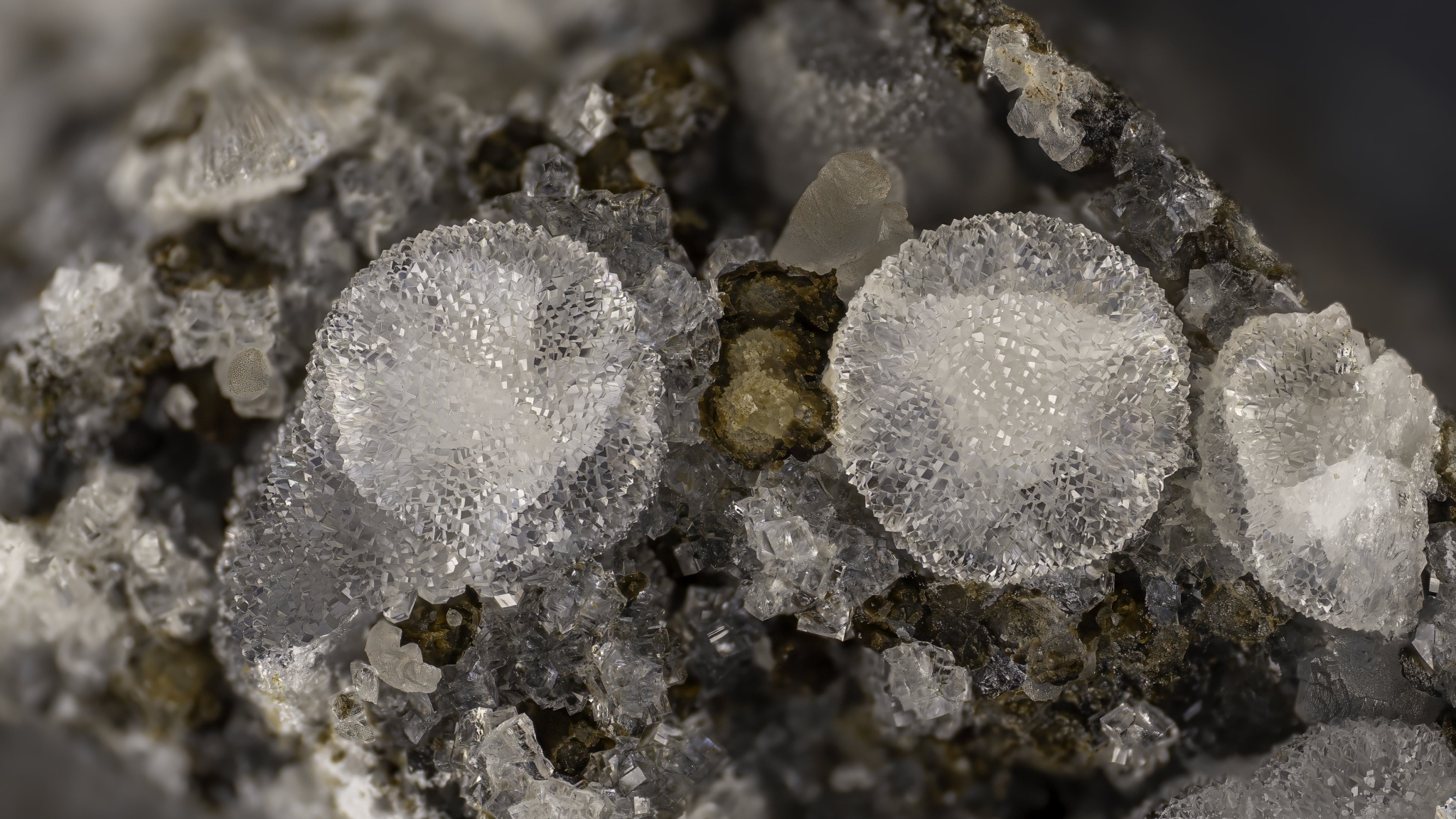
An elegant combination specimen of phillipsite — the basalt-hosted zeolite celebrated for its distinctive cruciform interpenetration twins — alongside well-crystallized white calcite. The interplay of the two species on a single matrix beautifully illustrates the sequential low-temperature crystallization typical of volcanic environments.
A basalt lava flow erupted, cooled, and locked gas bubbles inside like little sealed vaults. Over millions of years, warm alkaline water slowly crept in and began redecorating — first phillipsite zeolite crystals grew, then calcite. Two minerals, two chapters of the same slow underground story. First phillipsite, then calcite — two minerals that grew in sequence over an estimated 2 to 5 million years, each waiting patiently for the right chemical moment to begin.

Once sealed inside their basalt bubble, the crystals grew in absolute silence — locked in a space no larger than a marble, with no sound from the outside world reaching them for millions of years. The stale trapped air inside such a bubble smells of cold ancient rock, a mineral mustiness like the inside of a cave that has never been disturbed.
Phillipsite was named in 1825 by Armand Lévy in honor of William Phillips (1775–1828), English mineralogist, crystallographer, and co-founder of the Geological Society of London in 1807. Phillips was one of the most important early systematizers of British mineralogy; his 1816 work 'An Elementary Introduction to the Knowledge of Mineralogy' was a standard reference for decades. Calcite takes its name from the Greek 'chalix' (limestone); the modern name was standardized by Wilhelm von Haidinger in 1845.
Phillipsite is an uncommon basalt-hosted zeolite prized for its distinctive cruciform penetration twins. Although recorded from numerous localities, well-crystallized material suitable for display collections is not abundant. The combination with calcite on a single natural matrix adds modest additional paragenetic rarity to the specimen.

Own a Piece of Art

Cave Twins

Phillipsite, Calcite mineral

Own a Piece of Art

Cave Twins

Phillipsite, Calcite mineral

Select
Size
Size
Size
Size

Phillipsite, Calcite

Mineral name

Artist Konstantinas
Title Cave Twins
Year 2026
Medium Fine Art Photography
Print Process Archival pigment print on Hahnemühle
Framing not framed
Available Print Size 29.7 × 42.0 cm (A3)48.3 × 32.9 cm (A3+)59.4 × 42 cm (A2)
Limited edition of 3 prints

This artwork is part of an exclusive limited-edition series exploring the hidden architecture of natural minerals. Each photograph reveals the intricate geometry, texture, and chromatic depth formed over millions of years, captured with museum-grade precision and printed to the highest archival standards.


Every print is produced using archival pigment inks on Hahnemühle fine art paper, ensuring exceptional color stability, tonal richness, and a lifespan of 60–100+ years under proper conditions. The surface structure of the paper enhances the mineral’s natural luminosity, giving the image a tactile, sculptural presence.

Special Edition A unique Artist’s Proof (AP 1/1) is available, featuring a mineral specimen presented together with the print. Its inclusion alongside the print transforms the work into a uniquely layered art object, where the physical mineral and its photographic interpretation amplify each other’s presence, rarity, and long-term artistic value.
Authenticity Each print is individually produced, inspected, and hand-signed by the artist. It is accompanied by a certificate of authenticity and is part of a strictly limited edition. Once the edition is sold out, no further copies will ever be made.
Cart (0)

Your cart is empty