Rauenthalite Phaunouxite

Origin №1

Artistic name

Formula
$Ca_{3}(AsO_{4})_{2}\cdot 10H_{2}O / Ca_{3}(AsO_{4})_{2}\cdot 11H_{2}O$
Rarity
Extremely Rare / Endemic
Curiosity
Surprising

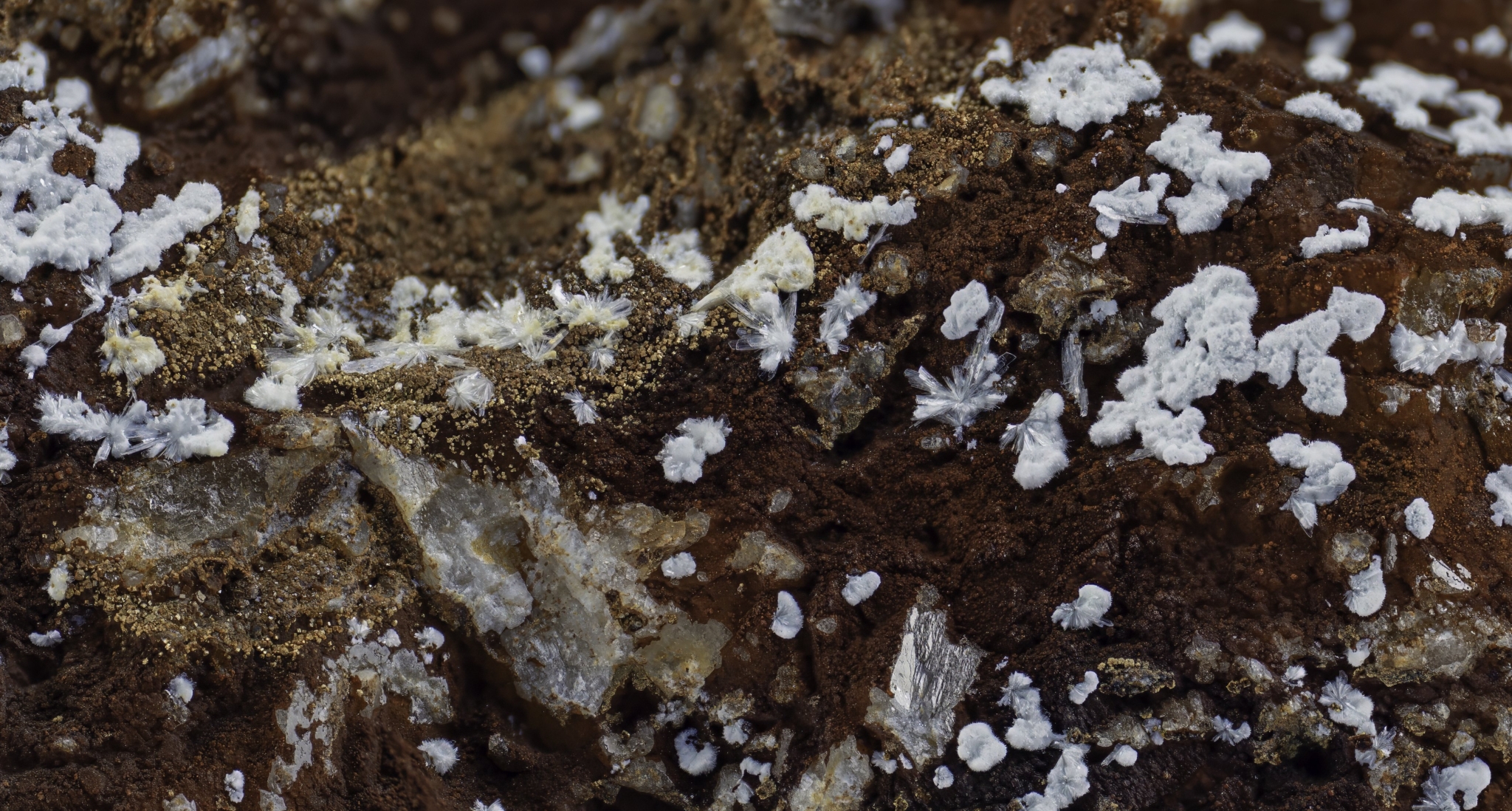
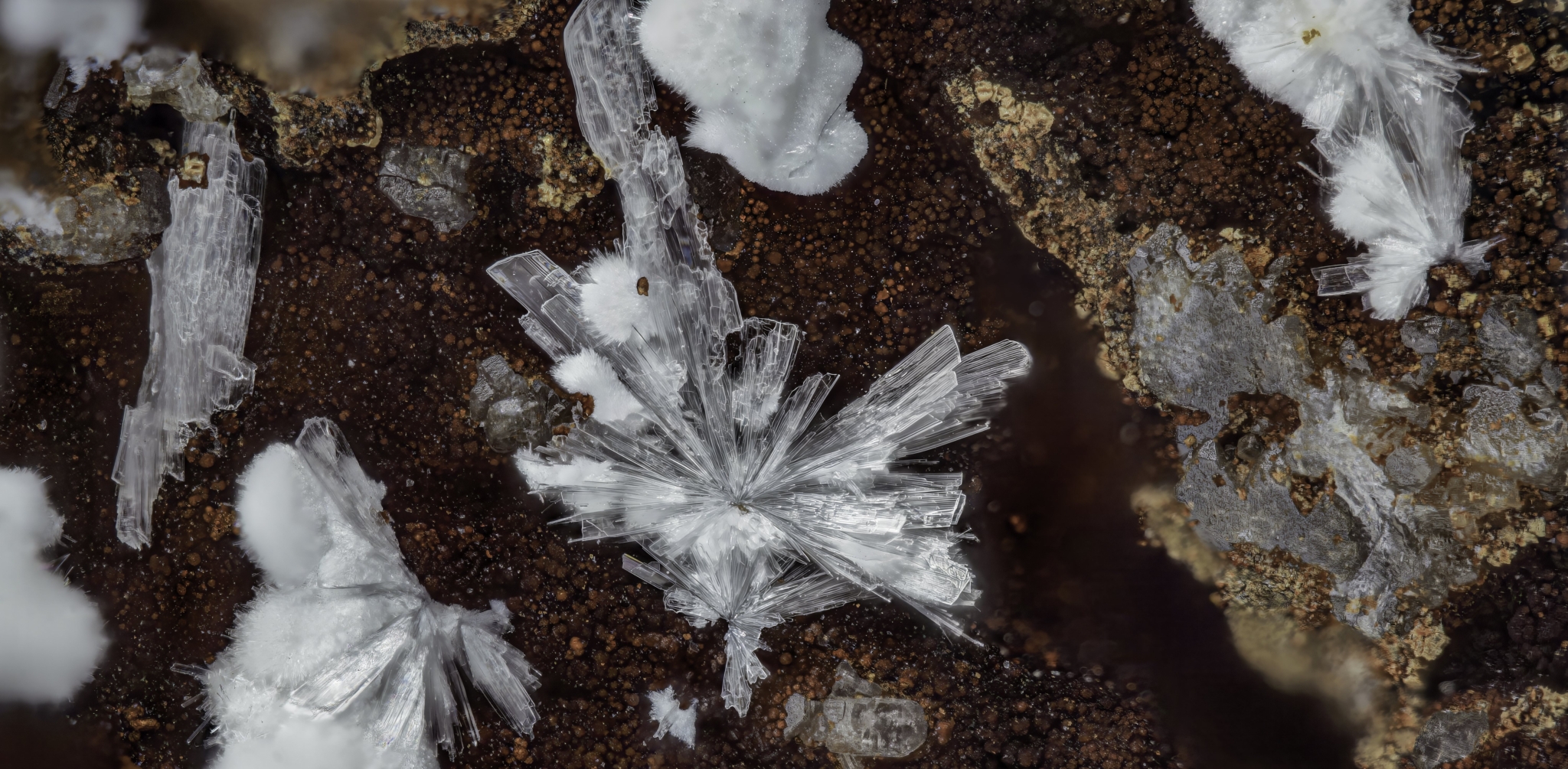
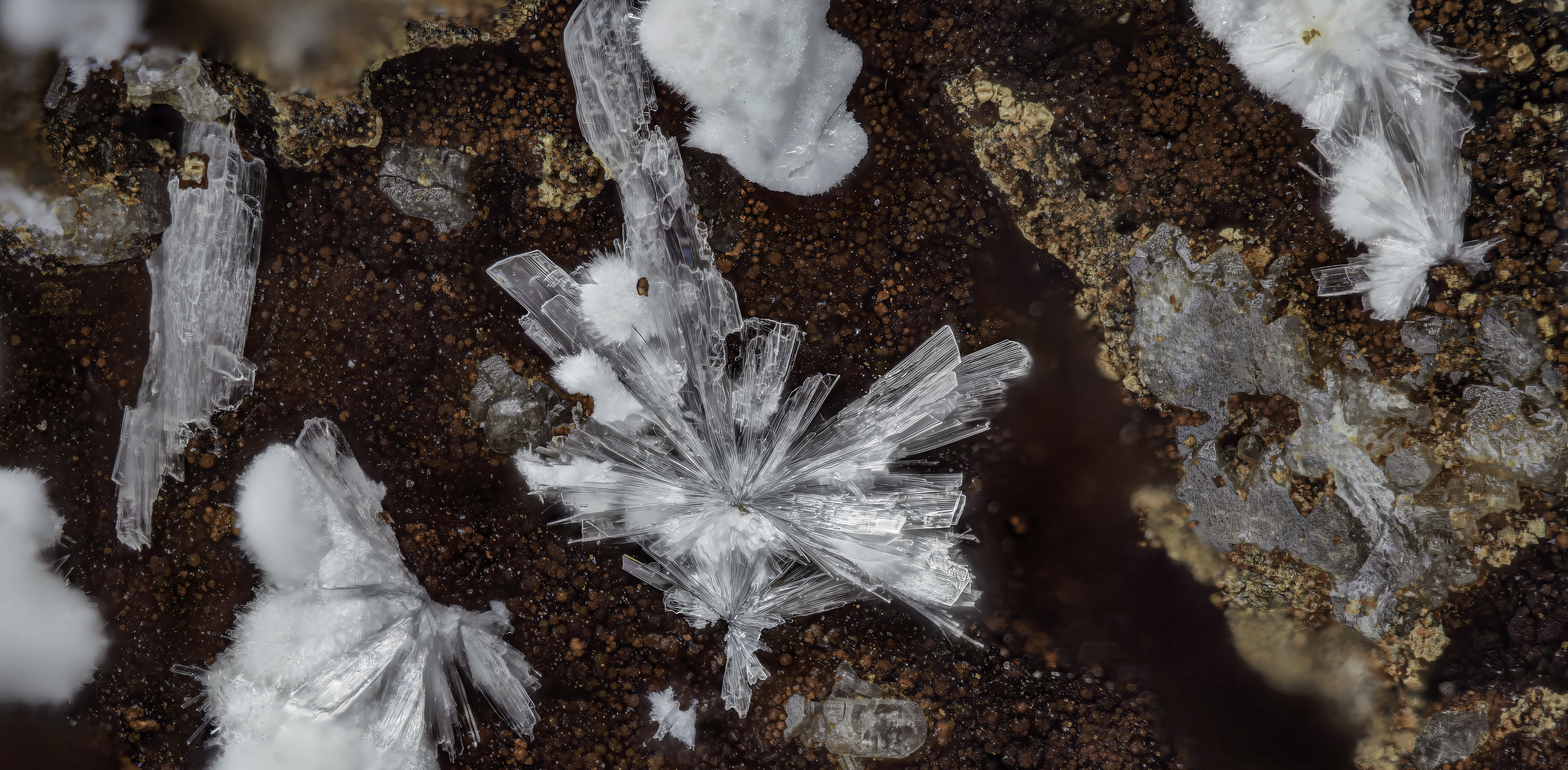
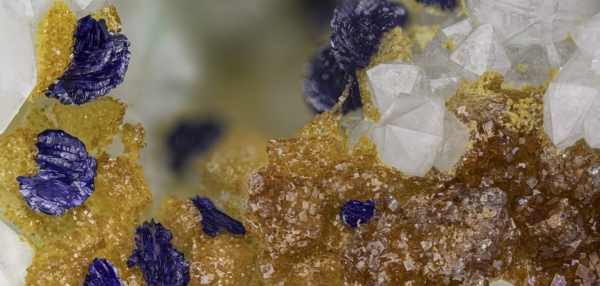
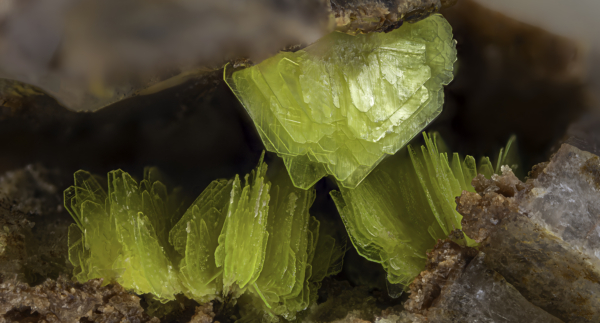
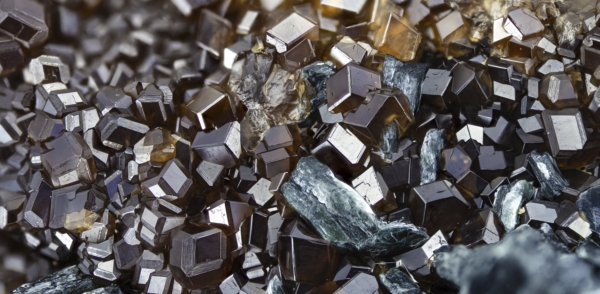
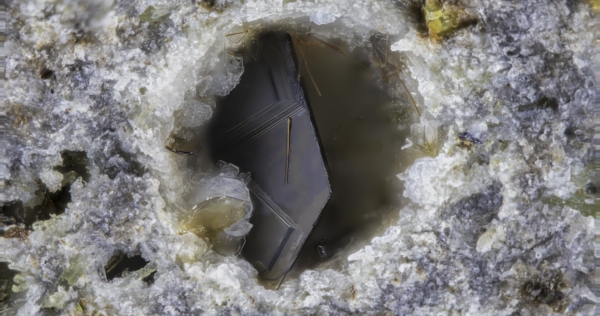
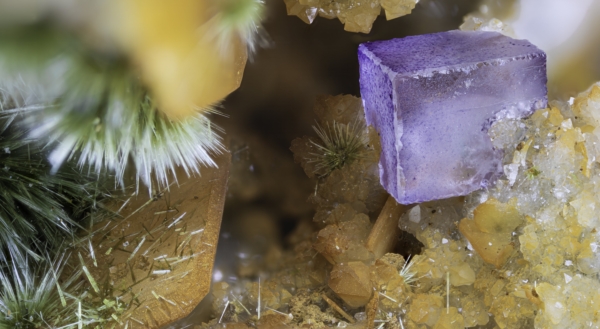
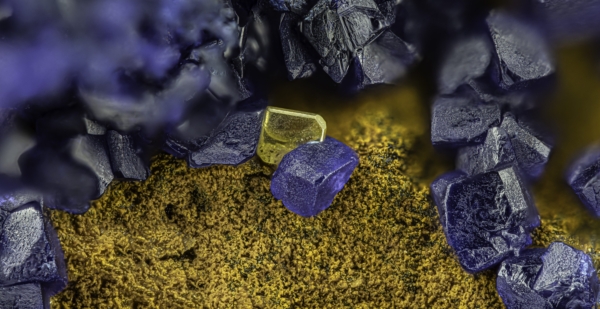
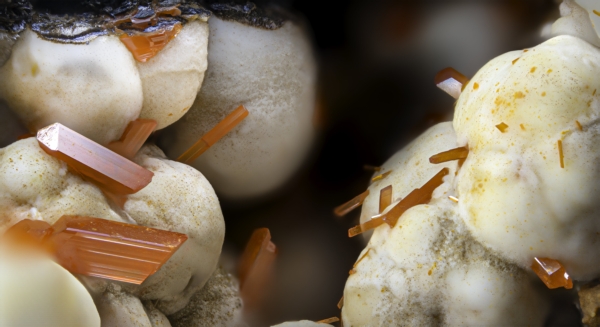
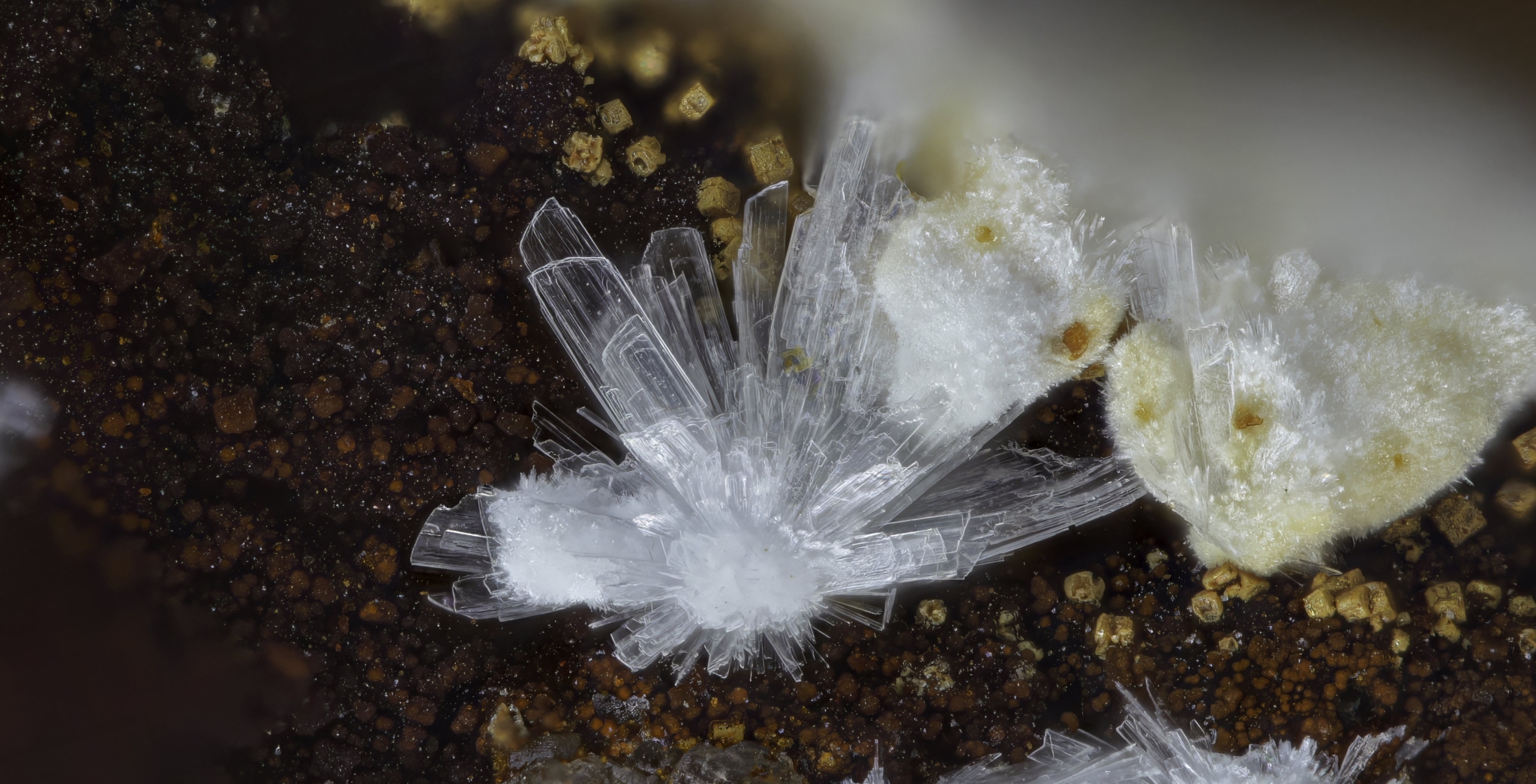
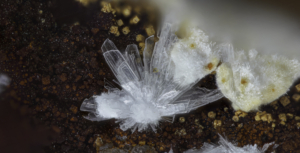
A rare co-occurring pair of hydrated calcium arsenate minerals forming delicate colorless crystals, first described from the Clara Mine.
Description

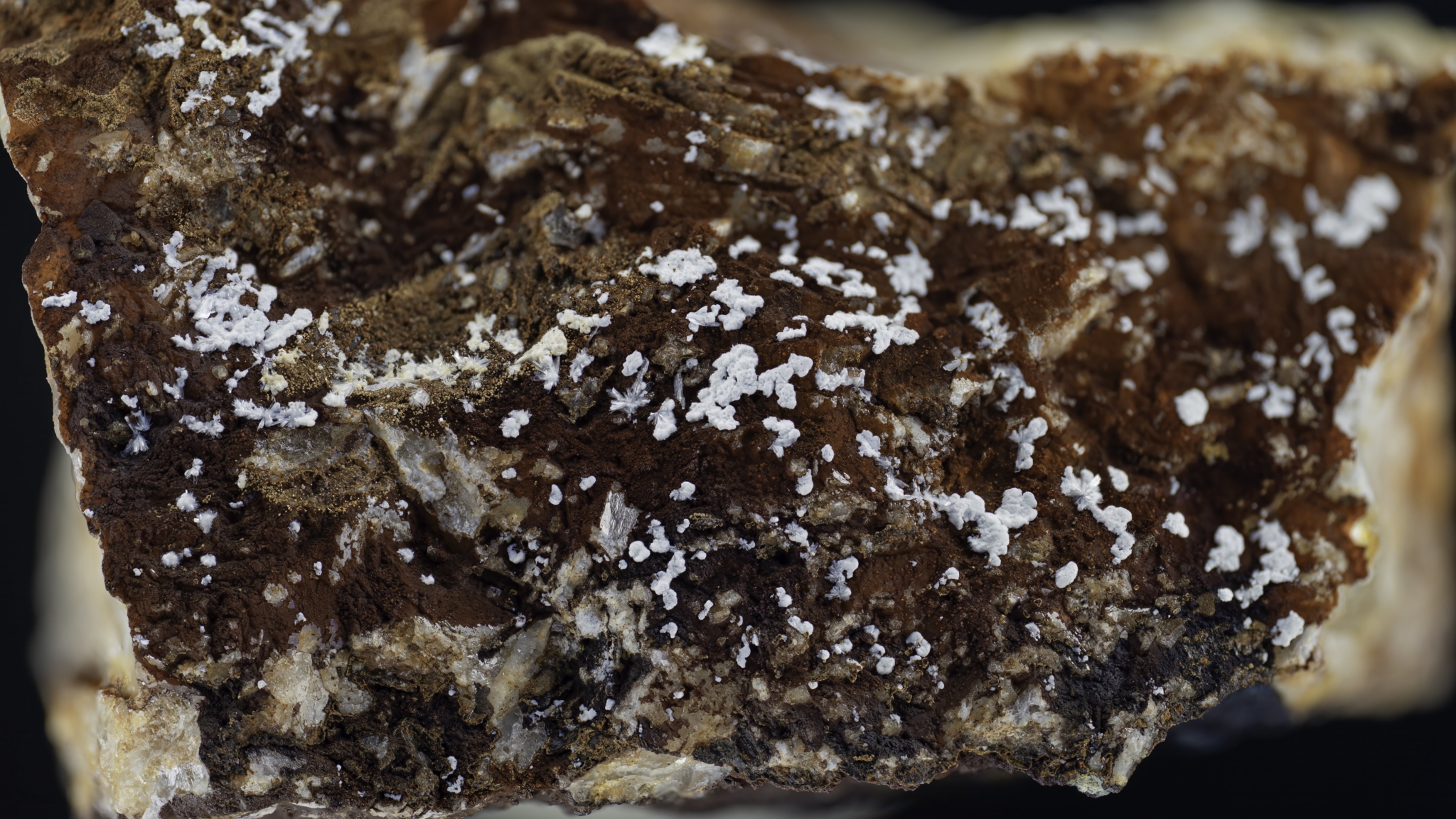
A rare and scientifically significant co-occurring pair of hydrated calcium arsenate minerals. Rauenthalite and phaunouxite form as efflorescent crusts and delicate white to colorless crystals, distinguishable only by their differing degrees of hydration. Both species were first described from the Clara Mine, making any specimen from this locality historically important to the mineralogical record.
Deep inside the Clara Mine, rainwater slowly seeped through cracks in the rock over millions of years. Along the way it dissolved minerals — and when two different chemical streams finally met in a sealed underground pocket, they reacted and crystallized into something the world had never seen before. Like two ingredients combining to bake a completely new dish. The crystals you see here likely grew over a period of roughly 10,000 to 100,000 years — drop by drop, molecule by molecule, in total darkness.

The formation environment was one of near-total silence — deep underground, sealed from the surface, the only sound an occasional slow drip of water working its way through a hairline crack in the rock. The air would have smelled of cold, damp stone and faint chalk, like the inside of an ancient cellar that has never once been opened.
Rauenthalite is named after its type locality — Rauenthal, a village near Wiesbaden in the Rheingau region of Germany, where the mineral was first described. Phaunouxite takes its name from the Phanou stream near Oulx in the Piedmont region of Italy, the second known locality for the species. Both minerals were formally described from the Clara Mine in Germany's Black Forest, which serves as the world reference site for the pair.
Both rauenthalite and phaunouxite are exceptionally rare hydrated calcium arsenate minerals, with the Clara Mine serving as the type locality for phaunouxite. Co-occurring specimens of both species on a single matrix are virtually unknown outside of this single world-class locality, and their combined scientific significance makes any such piece genuinely exceptional.

Own a Piece of Art

Origin №1

Rauenthalite Phaunouxite mineral
Own a Piece of Art

Origin №1

Rauenthalite Phaunouxite mineral

Select
Size
Size
Size
Size

Rauenthalite Phaunouxite

Mineral name

Artist Konstantinas
Title Origin №1
Year 2026
Medium Fine Art Photography
Print Process Archival pigment print on Hahnemühle
Framing not framed
Available Print Size 29.7 × 42.0 cm (A3)48.3 × 32.9 cm (A3+)59.4 × 42 cm (A2)
Limited edition of 3 prints

This artwork is part of an exclusive limited-edition series exploring the hidden architecture of natural minerals. Each photograph reveals the intricate geometry, texture, and chromatic depth formed over millions of years, captured with museum-grade precision and printed to the highest archival standards.


Every print is produced using archival pigment inks on Hahnemühle fine art paper, ensuring exceptional color stability, tonal richness, and a lifespan of 60–100+ years under proper conditions. The surface structure of the paper enhances the mineral’s natural luminosity, giving the image a tactile, sculptural presence.

Special Edition A unique Artist’s Proof (AP 1/1) is available, featuring a mineral specimen presented together with the print. Its inclusion alongside the print transforms the work into a uniquely layered art object, where the physical mineral and its photographic interpretation amplify each other’s presence, rarity, and long-term artistic value.
Authenticity Each print is individually produced, inspected, and hand-signed by the artist. It is accompanied by a certificate of authenticity and is part of a strictly limited edition. Once the edition is sold out, no further copies will ever be made.
Cart (0)

Your cart is empty